Tag Archives: american

Napoleon’s Little Red Man of Destiny

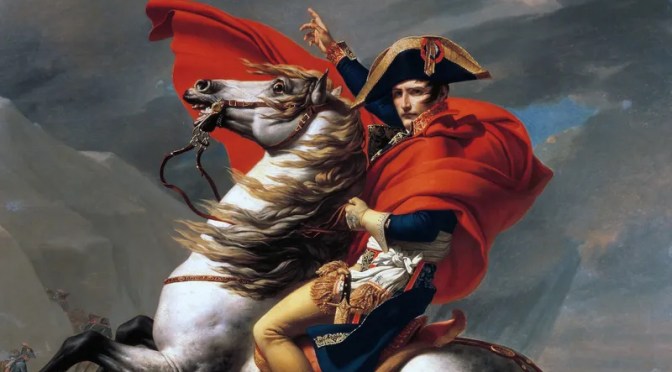
Napoleon Bonaparte: emperor, general, conqueror. At his height, France and therefore Napoleon controlled most of Western and Central Europe, as well as a colonial jewel box from the tip of South America to Indonesia second only to the British. Today, he’s largely remembered for two things: being short and being the first great example of why you don’t want to invade Russia in winter. The former is largely a misunderstanding: at 5’6”, Bonaparte was average height for a late 18th-century Frenchman, but tended to surround himself with taller generals, giving the appearance that he was shorter than the common man. The latter is a classic tale of hubris–Napoleon bet his profound gift for logistics and strategy against the resolute Russian army and their brutal climates, and lost. Unfortunately, this was all against the counsel of one of Napoleon’s greatest advisors: an ethereal dwarf known as ‘The Little Red Man of Destiny”.

Though possessing a rational mind hungry for planning and logistics, Bonaparte was also fascinated with the esoteric and otherworldly. He would regularly interpret and analyze his dreams for hidden meaning, and loved to tell ghost stories. He also claimed to be visited and advised many times by The Little Red Man, first appearing to him during the Egyptian Campaign in 1798. The creature offered Napoleon a deal: if he followed the strange man’s orders he would personally find success on the battlefield for the next ten years, and to convince the general the Little Man added that he had previously advised many of France’s greatest leaders.

“You have become far too ambitious,” the red man chided the general. “The French people are becoming wary of your overwhelming lust for power.”

“I have only ever done what was in the best interest of France and not my own, sir,” retorted Napoleon. “And how is it that you know so much of my plans?”

A smile crept across the little man’s face as he said, “I have been by your side since you were a boy. I know you better than you know yourself.”

Les Lutins

Descriptions of The Little Red Man are quite similar to another common figure in French folklore, les lutins. The lutins were said to be similar to British and Scandinavian folklore of house spirits like elves, gnomes, sprites, and hobgoblins. Occasionally they would appear as a saddled horse ready to be ridden, known as Le Cheval Bayard. Lutins are often blamed for tangling human or horse’s hair into knots while they sleep (often called elf-locks or fairy locks).
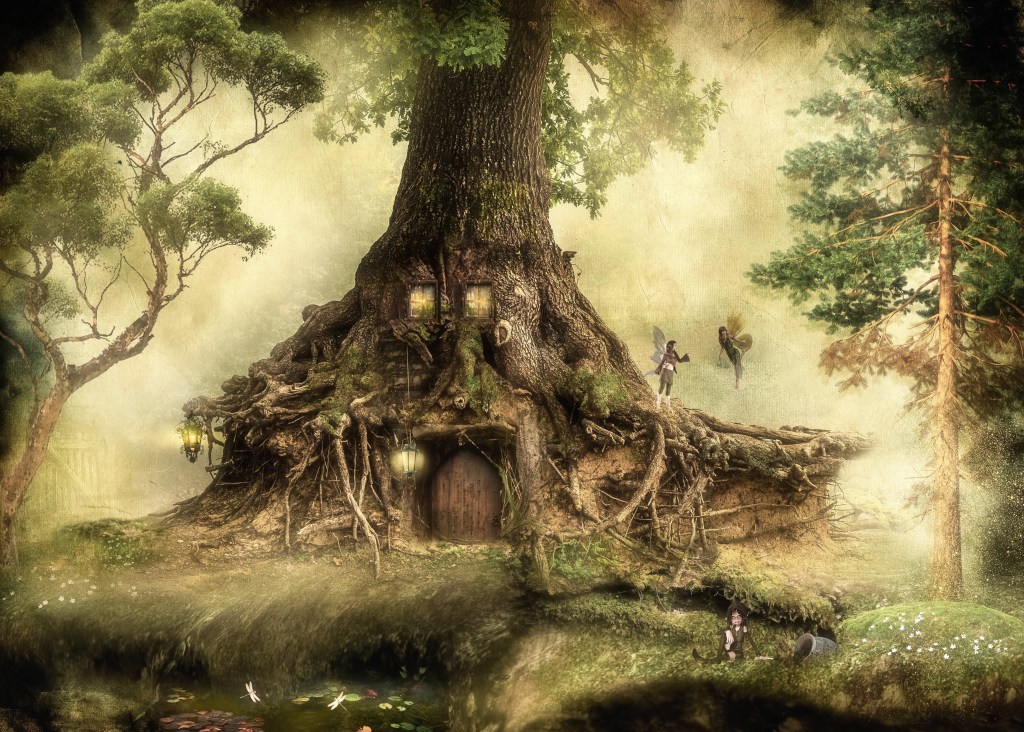
Image by Willgard Krause from Pixabay

First appearing in literature between 1176 and 1181 by Benoît de Sainte-Maure as well as Wace, the lutin (also called luitin, nuiton, or netun in some texts) is described as a sea monster. In the early 14th century, “Le Chevalier de La Tour Landry” describes the ‘luitin’ as “a kind of demon, more mischievous than evil, who comes to torment people.” The name likely originates from Latin’s ‘Neptunus’, the Roman god of the seas, which in Late Latin became a catch-all term for all Pagan gods. The transition from netum to nuiton was probably influenced by Old French nuit (‘night’), and by the Old French luitier (‘to fight’).

Marie Catherine d’Aulnoy’sLe Prince Lutin” in 1697 delved deep into the world of the lutin, describing lutin of the air, earth, and water. In the story, one lutin describes what it is to be one of their own: “You are invisible when you like it; you cross in one moment the vast space of the universe; you rise without having wings; you go through the ground without dying; you penetrate the abysses of the sea without drowning; you enter everywhere, though the windows and the doors are closed; and, when you decide to, you can let yourself be seen in your natural form.”

As the French colonized the New World, the lore of the lutin came with them. In the Americas, though occasionally appearing as a dwarf adorned in red (more on that later), lutin largely shed their humanoid appearance and adopted forms more akin to pets and local animals that would hang around homes and farms. All-white cats in particular were expected to be lutin, but any animal of distinction that was observed to stay close to human domiciles was said to likely be a lutin.

The Little Red Man of Destiny

But what of Napoleon’s Little Red Man and his claims to have influenced French leaders? The first reported encounter was with Catherine de Medici, Queen of France from 1547 to 1559 and mother to three other French Kings. She reportedly came face-to-face with the Red Man during the construction of Tuileries Palace in 1564, described as a gnome-like creature in red clothing. Catherine considered him an uninvited guest, a spirit, and overall a bad omen.

The French Wikipedia entry for Tuileries attributes the Red Man to being the ghost of Jean l’Écorcheur, a butcher that was strangled by order of Catherine de Medici herself. Jean swore to Catherine’s astrologer, Cosme Ruggieri, that he would return and that all of Tuileries inhabitants would suffer grave misfortune.

Catherine and her family indeed lived through one of the French monarchy’s most turbulent times, beset by constant civil and religious war. Italian-born Catherine, raised to be Roman Catholic, was already a sore point to the Protestant French citizenry, and she eventually encouraged her son, King Charles IX, to massacre thousands of Huguenots during St. Batholomew’s Day in 1572, a pre-emptive attack out of fear of retaliation for the supposedly Spanish papal ambush of Admiral Gaspard de Coligny. The rest of Catherine’s life in the monarchy would be punctuated by bloodshed, loss, and heartbreak.

The next sighting of The Red Man would occur in 1610. He was seen by King Henry IV shortly before his assassination at the hands of Catholic zealot and schoolteacher François Ravaillac. Queen Anne d’Autriche ran across the sprite a few days before the Fronde, a series of bloody civil wars beginning in 1648. Chambermaids of King Louis XVI encountered the Red Man in the king’s bed in 1792 while the monarch was on the run, trying to evade revolutionaries. Later that same year, Louis’s wife Marie Antoinette saw the Red Man in the corridors of Tuileries on August 9th, just one day before the revolutionaries would storm the palace and end the monarchy. A few months later guards in La Square du Temple spotted the little man, the same prison in which Louis and Marie awaited their fate. In 1817, Tuileries Palace burned to the ground and with the monarchy eliminated, The Little Red Man moved on to his newest plaything, the man who would be Emperor, Napoleon Bonaparte.

Despite Napoleon’s success in Egypt, the Little Man informed him that the fleets were not following their orders, the Egyptian Campaign would stall, and by the time he returned to France he would find her beset on all sides by England, Russia, Turkey, and their European allies. As history shows, the Red Man’s claims all proved to be true.

Despite this setback, Napoleon appeared to remain in contact with the Little Red Man through the rest of his military career. The new government residing in Tuileries was well aware of Bonaparte’s stories of encountering the Red Man and it was claimed he visited him whenever the Emperor stayed in the Palace. A sworn affidavit by Counsellor of State Louis Mathieu Count Molé said that he had heard himself the Little Red Man of Destiny meet Bonaparte shortly after the Battle of Wagram.

Wagram was a hard-fought two-day onslaught against the British and Austrian Fifth Coalition and Napoleon’s own French, German, and Italian Imperials. After the struggle ended on July 6th, 1809, the Red Man appeared again to Napoleon at midnight in his Schönbrunn headquarters. The original ten years already expended, Napoleon begged the man for a five-year extension to his contract. The Little Man agreed, but this time added the caveat that Bonaparte must never launch a campaign in Russia. Of course, we’ve already covered how that went-–it resulted in the biggest defeat of Napoleon’s career, bigger than The Battle of Waterloo.

The Little Red Man’s final appearance was on the morning of January 1, 1814. Counsellor of State Molé was approached by the Red Man, demanding to see the emperor on matters of urgent importance. Napoleon had given strict orders to not be disturbed, but when he heard who was calling he approved the visit immediately. Napoleon begged the man for more time, enough to complete a handful of proposals, but the Red Man balked at his request. Instead, the Little Man told him that he had three months to achieve peace with his enemies, or there would be consequences.

Napoleon ignored the Little Man and instead launched a new eastward campaign that failed miserably, all but delivering France into the hands of the European allies. On April 1st, three months to the day of the Red Man’s warning, the Senate called for Napoleon’s abdication, and he spent the rest of his life in exile on the isle of Saint Helena.

Le Nain Rouge

There is another place with ties to France that has a history of encounters with a little red man, and that is the area around the former French colony of Detroit, Michigan. Detroit has a long-standing tradition of encounters with Le Nain Rouge, literally “the red dwarf”, a small man dressed all in red with a gift for prophecy and a fondness for human suffering. Sound familiar?

Image by Sven Lachmann from Pixabay

Long treated as a bad omen or sign of misfortune, the Nain Rouge first appears in literature in 1883 in Marie Caroline Watson Hamlin’s “Legends of Le Détroit”. She describes the little man as being “very red in the face, with a bright, glistening eye; instead of burning, it froze, instead of possessing depth emitted a cold gleam like the reflection from a polished surface, bewildering and dazzling all who came within its focus.” Charles M. Skinner’s “Myths And Legends Of Our Own Land” in 1886 also mention the Nain Rouge, characterizing him as “a shambling, red-faced creature, with a cold, glittering eye and teeth protruding from a grinning mouth.” Other accounts describe him as having an animal body but a man’s face with “blazing red eyes and rotten teeth” and covered in red and black furs.

While the lutin may originate in French tradition, it appears the Nain Rouge may have as much to do with Native American legends as it does the French. Some Native stories have identified the little red man as the “impish offspring of the Stone God”. French Christian Missionaries in the region that was to later become Detroit reported finding an Idol revered by the local natives, humanoid in appearance and painted red. Natives from the Erie Band referred to it as a Manitou, a Francofied version of the Algonquin word ‘monetoo’, a catch-all word for spirits and spiritual energies. Shortly after discovery by Europeans, they destroyed the idol with an axe that had been blessed by the missionary priests. Unfortunately, this ended up creating the opposite of the desired effect, as the natives declared the area cursed as a response to the colonists’ disrespect.

Antoine de la Mothe Cadillac was reportedly advised by a fortune teller that he must appease the Nain Rouge as part of the founding of Detroit in 1701, but ignored the warning and upon encountering the little man attacked him with his cane and yelled, “Get out of my way, you red imp!” Naturally, Cadillac suffered a string of misfortune afterwards. He was charged with abuse of power in Detroit and removed from his position, reassigned to Louisiana. Eventually he returned to France, where he was imprisoned and stripped of his fortune.

After that, the appearance of the Nain Rouge would portend disaster to European settlers and their kin, particularly in violent encounters with Native Americans. The little man was spotted shortly before the Battle of Bloody Run on July 30, 1763, where the British were killed by Chief Pontiac’s men from the Ottawa Tribe. The Nain Rouge was seen again shortly after the battle, dancing among the corpses on the banks of the Detroit River, which is said to have run red for days afterwards. When Governor William Hull surrendered Detroit in the War of 1812, the Nain Rouge was blamed on a series of misfortunes that put the city in such a position. Portentous Nain Rouge sightings have persisted until at least the 20th century, with reports of the creature coming shortly before the Riots of 1967, and again in 1976 shortly before an ice storm ravaged the area.

Image from detroitnews.com

Today, Detroit culture has made the Nain Rouge a local icon in its own right. Known as “The Demon of the Strait,” several local drinks are named after him and he has inspired a number of small budget films. Beginning in spring of 2010, Detroit has held an annual parade called the Marche du Nain Rouge, where the citizens “chase” the Nain Rouge out of town, often wearing masks and costumes so the dwarf won’t recognize them, banishing the little man from the city for another year.

So is the Little Red Man of Destiny or the Nain Rouge still out there? The people of Detroit seem to think so, and in fairness the practice of running him out of town every year seems to coincide with the city turning its luck around. Without a French monarchy to harass, he seems to have removed himself from European politics. We may just have to wait for the next disaster to befall the former French empire before we know for sure. In the meantime, the little man in red dress will have to reside in folklore… and old Twin Peaks episodes.

(Disclaimer: David Lynch is not connected to the French monarchy in any way. I checked.)

The Ghost of Goose River Bridge

This tale originally appeared in Episode 003 – Salty Bill’s Limp Richard

One of our favorite ghosts here at Booze + Spirits, for reasons that are immediately apparent, is that of William Richardson, sometimes called “The Pitcher Man”…

Richard lived during the American Revolutionary War in Goose Creek, which today is part of Rockport, ME. During the war it was common for all the men of fit and fighting age to get sent off on the front lines, so small outlying communities like Goose River were often left solely to the care of the women, children, infirmed, and elderly. As you might imagine this made these small towns easy targets, and as such Goose River was often hounded by Redcoats looking to break support for the Revolutionaries by harassing locals and raiding homes for supplies.

Photo by Rusty Watson on Unsplash

Interestingly, rather than breaking the locals though, the constant harassment by their agitators instead inspired them to look for ways to cock things up for the annoying Brits wherever they could. (Plus ça change, plus c’est la même chose, non?) The remaining inhabitants of Goose River would often hide in the tree lines and take pot shots at Redcoat landing parties rowing to shore from their ships. A couple of the older men starting wreaking havoc by sitting just in earshot of the Redcoats, one playing roll call on his drum while the other yelled out military commands, giving the impression of regiments of Patriots nearby just out of sight. But it was the real star of the group, William Richardson, who would go down in local history for his actions.

One evening, American privateer Samuel Tucker had acquired a large shipment of tea from a poorly watched British vessel and as a result soon found himself being pursued by an imperial warship down the Maine coast. Being an avid fisherman and possessed with intimate knowledge of the narrow rocky island passes that dot the area, William Richardson came to Tucker’s aid, helping him navigate the hazardous coastline, and guiding him to a hiding spot near Harpswell.

Photo by Chris Henry on Unsplash

Harpswell lies in a channel in the middle of Sebascodegan Island, and the Brits were well aware of the dangerous, irregular channels throughout. Knowing that their warship couldn’t pursue Tucker through the treacherous passages, they decided instead to play a waiting game and set up a blockade, waiting for the moment Tucker and Richardson would inevitably have to come back out of hiding and attempt to flee to safety before daylight exposed their position. Tucker was worried, but William Richardson knew these seas and the more importantly the weather well, eventually convincing him they just needed to sit tight until the next storm.

Sure enough, a storm rolled in, and the squall demanded much of the Brits attention. Again, using that intimate knowledge of the local waters, Richardson and Tucker crept their vessels through the rough waters and escaped unseen past the blockade. By the time the Brits realized what had happened, Tucker was long gone and well on his way to the safety of Boston Harbor.

Photo by Evelyn Paris on Unsplash

When the war ended in 1783, all of Goose River celebrated, and none more than William Richardson. He threw a large party at his home, but as the last guest departed for the evening, he decided that was no reason to let the party die out. Richard set to grabbing a pitcher, filling it with ale, and began roaming into town, greeting folks in the streets, knocking on doors, and trying to rally some compatriot party-goers.

While crossing the Goose River bridge, Richardson ran across three men and approached them, as he had everyone he encountered that evening, to join in his festivities. Unbeknownst to him, these three were Tories–men still loyal to the British crown, and none too happy about the colonists recent victory. One man clubbed him in the head, and trio left him unconscious on the bridge, where he succumbed to his injury and died before someone else happened to find him.

Photo by Pixabay

Ever since then, Goose Creek bridge and its different incarnations and modernizations over the years have been haunted by Richardson, often seen staggering around, pitcher in-hand and looking for more party goers. He is often simply called ‘The Pitcher Man’.

The biggest spat of Pitcher Man sightings comes from the 1950’s, when the area became popular as a ‘Lover’s Lane’ spot for hot and bothered teens to park their car and get frisky where they wouldn’t be noticed by prying eyes. So they were all the more surprised to see a man in Revolutionary-era clothing stumble out of the woods, pitcher in-hand, and tapping on their car window looking for someone to share a drink with him. Reports of The Pitcher Man became such an issue that eventually a sign was posted on the site, reading “no trespassing between sunset and sunrise” (though some more skeptical folks might think it has more to do with the teenage canoodling).

Either way, an American hero and a ghost that never wants to see the party die is definitely a ghost that we here at Booze + Spirits feel is worthy of remembering and celebrating.

Cover photo by Eric Muhr on Unsplash

Image created with Microsoft Copilot Designer

Owl Women of North America

Curiously, the tales of human-sized monstrosities melding the features of humans and owls are found far and wide in the folklore of native tribes throughout North America.

The Apache, for instance have tales of ‘Big Owl’, a large, human sized owl that would eat children and transform into an ogre. He appears to have been used largely in a ‘boogeyman’ context, the kind of story meant to keep children from running out of view of watchful adults. The Choctaw told of an owl deity known as Ishkitini, the horned owl, who would hunt grown men and, like the Irish banshee, had a screech that served as a portent of death. The Wabanaki know of Cipelahq, a peculiar and dangerous bird spirit with the head and talons of a large owl while the rest of its body is invisible to the human eye.

Photo by Tengyart on Unsplash

But perhaps the most feared of the owl creatures are the subsects that can be collectively called ‘Owl Women’. Owl Women show up in the tales of many tribes, and can always be seen creeping about the outskirts of civilization. The common traits between them consist of being intelligent creatures, practicing dark magic, and a hunger for the flesh of humans.

La Lechuza

La Lechuza is told of mostly by tribes in Northern Mexico, though there is some spillover to some of the western tribes. La Lechuza is a witch than can transform into any animal it chooses, but tends to prefer a large owl or crow. “Lechuza” is often used interchangeably with “bruja”.

While most traditional Mexican legends can be traced to a root source, La Lechuza’s origins are lost in the haze of oral tradition and without a clear origin, as the legend seems to have spread between tribes that were long separated or had little contact with each other. The only thing known for sure is that the tale predates the conquistadors. One source suggests that Mexico largely regards birds of prey as evil, which is why lechuza (literally ‘owl’ in Spanish) takes the form of a bird of prey, but this interpretation seems highly dubious as an eagle devouring a snake is literally the symbol of Mexico.

Image by Jakub Zeman from Pixabay

In human form, lechuza are often seen wearing dresses made of ‘lechuzan’, or owl feathers. As an owl or other animal, they are a vaguely human sized version of the animal, but always with a woman’s head and animal body. As a bird of prey their giant talons are capable of lifting a man or even a moderate-sized car, according to some eyewitnesses. Vocally, they are capable of mimicking a large number of animals, but their own call is typically a series of eerie whistles, typically in threes.

The transformation from woman to beast has some interesting caveats. They may choose to transform their head along with the rest of their body if they wish, but they seem to suffer a diminishment of their powers by doing so, explaining their odd appearance. The lechuzas transformation is also peculiar in that they may change both at and against their will–perhaps an expression of a curse on the unwilling. But most transformations, even the undesired one, have an upside as lechuzas often get paid for their services.

La Lechuza can be either a woman who learns to turn into an owl or vice versa, and according to legend will only change form if paid to, otherwise they lose their power. Some stories claim that Las Lechuzas are the women that were murdered by their lovers and seek revenge. Others say they are just women who delve too deep into dark magics. One of the more popular explanations is that they were women who practiced witchcraft and were found out by the village, who exposed and killed them. These women swore revenge on all those that harmed them and anyone else that stands in their way. Supposedly there is an organized cabal of shapeshifting Lechuza women, so they can potentially hunt in packs if necessary.

Las Lechuzas are thought to feed on humans and will hunt them in the dark or try to lure them out of their homes by making the sounds of something in distress, like a crying baby or a kitten or puppy. Lechuza is thought to control the souls of men and often lead them to their death, though that aspect comes off a little cloudy, as La Lechuza is more about doing the job she is paid for rather than her own moral code. Her reputation for evil is more linked to her unnatural powers and her willingness to take on any task for payment rather than her own desires for revenge or suffering.

Photo by Stormseeker on Unsplash

Supposedly they only hunt people who have caused harm to women or have evil in their heart, so there is some relief there for the virtuous among us. Regardless of the individual though, seeing la lechuza is never a positive sign, and usually a portent of a coming tragedy. Unfortunately, even the eyewitnesses of la lechuza that were not attacked seldom seem to be long for this world, suffering seemingly unrelated accidents or violence shortly after.

More modern tales tell of La Lechuza involve the old ‘high strangeness’ chestnut of draining the power from a car battery, stranding a potential victim and forcing them to go for help on foot. Traditional tales speak of la lechuza having control over thunder and lightning, so there seem to be some interesting parallels there with control of electricity. Unusual thunderstorm patterns can be a sign that la lechuza is nearby, as well as spotting the shadow of a large bird, or even hearing birds singing at night.

Should you happen to find yourself hunted by la lechuza, the first rule is to never attack them head-on. They can easily overpower a human and are immune to non-magical weapons. Lines of salt will prevent their crossing, as it will most malevolent magics. Never make eye contact, as that is said to be how they gain control over your soul or in some cases learn to take your appearance. Funnily enough, they appear to hate to be sworn at, so the best defense against them is to let your foul mouth fly and it will likely run la lechuza off.

Photo by Anya Juárez Tenorio

Tah-tah-kle’-ah

Tah-tah-kle’-ah is a species of horrible and powerful owl women monsters talked about by the Yakama tribe form the territory today covering Southern Washington and Northern Oregon. There are many parallels with a creature called sne-nah by the Okanagans, whose territory was in nearby modern British Columbia. The most famous accounts of the tah-tah-kle’-ah come from an account taken by L.V. McWhorter from Yakama tribesman William Charley in 1918.

L.V. McWhorter was an early 20th-century farmer who became interested in the native culture of first the tribes in his native West Virginia and later in the plateau tribes of Washington. He recorded many of their tales and became a vocal advocate for the mistreatment these tribes suffered at the hands of the American government. Though an amateur, his early dedication to recording the native tales long before many other white men cared to has earned his writings a place in the Washington State University special collections.

Unfortunately, my investigation of William Charlie turned up nothing, but the following story is reportedly in his words:

“Before the tribes lived peaceably in this country, before the last creation, there were certain people who ate Indians whenever they could get them. They preferred and hunted children, as better eating.

Photo by Paul Kerby Genil

“These people, the Tah-tah kle’ -ah, were taller and larger than the common human. They ate every bad thing known such as frogs, lizards, snakes, and other things that Indians do not eat. They talked the Indian language, and in that way might fool the Indians. There were five of them, all sisters. But at the last creation they came up only in California. Two were seen there. They were women, tall big, women, who lived in a cave.

“One time the Shastas (Shasta Indians) were digging roots and camped. They knew that the two Tah-tah kle’ -ah were about, were in that place. The Indians were careful, but the Tah-tah kle’-ah caught one little boy, not to eat, but to raise up and live with them. The boy thought he would be killed, but he was not.

“The Tah-tah kle’-ah had him several days. One day, when they were out of sight, the boy hurried away. He ran fast, traveled over rough, wild places, and at last reached his own people.

Photo by Elle Cartier on Unsplash

“After many years the two Tah-tah-kle’-ah were destroyed. None knew how, but perhaps by a higher power. Their cave home became red hot and blew out. The monster-women were never seen again, never more heard of but they have always been talked about as the most dangerous beings on earth.

“One other of the five sisters was drowned. From her eye, all owls were created. The person or power that killed her said to her, ‘From now on, your eye will be the only part of you to act. At night it will go to certain birds, the owls’.

“Owl [Sho-pow’-tan] was the man. He was a big chief who lived at Po-ye-koosen.  He went up the Naches [river?] to hunt deer. Many men went with him. They hunted all one sun, and when evening came, Owl did not return to camp. The hunters called to each other, ‘Owl is not here! Owl is away! Owl is lost!’

Tah-tah-kle’-ah, the evil old woman with her basket, heard that call in the twilight, ‘Owl is lost!’ And she said to her four sisters, ‘We must go hunt Owl who is lost from his people. We will get him for ourselves’.

Image by Erik Karits from Pixabay

“Owl knew that Tah-tah-kle’-ah was coming for him; so he went up to a hollow place in the Tic-te’ ah. You can see the trail that he traveled up the face of the rock to the cave high up in the wall of Tic-te’ ah. Grass is growing along the narrow trail. You can see it when you are out from the rock where it winds up the cliff.

“Owl had killed a deer. He filled the tripe with the blood of the deer. He heard Tah-tah-kle’-ah coming, and he knew she would kill him. He knew, and he placed the blood-filled tripe in front of him. Tah-tah-kle’-ah entered the mouth of the cave. She looked. It was dark, but she saw it, the strange thing lying there. She did not know. She was afraid. She called to Owl, ‘Take it away! I do not like it!’

“Owl said, ‘No! That is something powerful, step over it.’ Tah-tah-kle’-ah did as told, stepped her foot over the tripe. Owl was ready. He did not get up. He sat there; and when the Tah-tah-kle’-ah stepped, he punched the tripe with his stick. He punched it often and it went, ‘Kloup! kloup! Kloup!’

“Tah-tah-kle’-ah was scared! she screamed, threw up her hands, and fell from the cliff. The wana [river] ran by the base of the cliff, deep and swift. Tah-tah-kle’-ah fell into the water and was killed.”

Photo by Dark Indigo

Stikini

The Stikini is a terrifying vampiric owl-person primarily known to the Seminole people of modern Florida, though there is some overlap with the Creek of modern Oklahoma, and the tale has spread some to swamp inhabiting tribes in New Jersey and Michigan.

Stikini are witches that have transformed themselves into giant undead owl-like monsters. These reanimated dead spend the nights hunting for human hearts to devour, and to hear their cry is to be marked for imminent death. Much like the infamous Skinwalkers among the Navajo tribe, the Seminole rarely speak their name, for fear of attracting their attention.

Photo by Ksenia Yakovleva on Unsplash

The stikini are completely indistinguishable from normal humans in the daytime, but at nighttime they vomit up their internal organs, blood, and soul, which is what allows them to transform into great horned owls and go hunting for sleeping humans. As with la lechuza, stikini can transform into any animal they wish, but prefer the visage of a giant owl. They hide their organs and innards up in the treetops to keep animals from eating them as well as away from others who would do them harm.

The stikini removes its victim’s heart through their mouth and returns with it to their lair where they cook it in an enchanted pot. Afterwards they can consume it and absorb their victim’s life force. Before sunrise, they must regather and swallow all their innards to again return to their human guise.

To defeat a stikini, one must first locate its organs. You can try to hide them or keep them from the stikini, as sunlight will destroy them if the sun rises before they have transformed back into human form, but a stikini will be able to sense its organs’ location and you may have vicious life-and-death battle on your hands. The safest method of killing a stikini is said to be to prepare magical arrows, decorated with owl feathers, blessed and dressed with sacred herbs. Then wait near the stikini’s organs and shoot the monster while it is swallowing its organs. This appears to be when it is at its most vulnerable.

Cover photo by Dušan veverkolog on Unsplash

Photo by Seats Photographix

Ep. 28 – Hominid Battle Royale

Show Notes

It’s Thanksgiving here at The Booze + Spirits Podcast, and we celebrate it like most Americans–by being painfully unaware of the plight of Native Americans and having a big blow-out fight with family members. After a few tales of Native American lore, Nick goads Cait into storming out. Afterwards, Nick and Mel ‘go for a walk with the cousins’ and ramble on about proto-man behavior including Bigfoot, Wendigos, and Facebook. Like a Thanksgiving dinner, it goes on too long and makes you wonder what else you could be doing right now if you didn’t feel so guilty obligated. Happy Turkey Day!

Like the podcast? Want more? Tell a friend! You can also support our show by shopping our Teepublic store, donating through Anchor, or subscribing to our Patreon! Your support allows us the freedom to create more, bigger, and better content! 

Find and follow The Booze + Spirits Podcast on Facebook, Instagram, and Twitter!

And be sure to rate, review, and subscribe through Anchor, Apple, Spotify, Google, YouTube, or the podcast delivery system of your choice!

Theme music is “Come Back Down” by The Lonely Wild, licensed through audiio.

Featured image photo by Meritt Thomas on Unsplash

Remember to drink responsibly and in accordance with your local laws. Don’t end up our next ghost!

The Ghosts of Hannah’s Creek Swamp

History is a tricky thing. Like the old adage, “can’t see the forest for the trees”, there’s a lot of different ways to look at large events depending on the motivations and beliefs of the people not just telling the story, but also the ones researching them.

Take the American Civil War, for instance. It’s a topic that we circle often on this site and on our podcast, mostly because it’s a lynchpin of American culture. The Civil War is one of the primary influences on the history of the United States. If the Revolutionary War is this country’s id, then World War II was our ego and the Civil War is its superego, and while we tend to deal with spirits of a more-or-less physical kind on this site, the ghosts and specters of the Civil War haunt us all in a very morally underpinning way.

I don’t want to get into ethical judgment or debate here, but in general, we look at the Civil War through a scope of ‘the South was performing human rights atrocities, and the North set out to stop them.’ That’s the broad “forest” view. But as anyone who has spent any time of social media will tell you, it is all too easy for a person, having ascribed themselves the virtue of “fighting evil”, to easily excuse themselves of horrific acts so long as they are against someone who represents that evil.

Photo by Chris Chow on Unsplash

In the Civil War, the North was very much the “invading force”–Northern soldiers pushed into the South much more than the other way around, and the citizens of the South, we’ve found while digging up ghost stories and histories, have many horrific tales of Northern soldiers acting in less than gentlemanly ways as they marched southward. Those tales comprise a portion of “the trees” in our ongoing metaphor.

One such story we’ve come across involved the fact that Union soldiers marching across the South were given leave to raid and plunder the homes and farms they came across as they continued to push. They were given orders not to harm unarmed civilians, and to make sure that they left each family with enough food and supplies to survive, but beyond those meager boundaries they were free to ransack and steal as they desired.

In fairness, most soldiers only took liberties up to what their orders would allow, but this particular ghost story involves one group that decided to play by their own rules. This unit, under the command of one Colonel David Fanning, pillaged and plundered at will, leaving bodies, ashes, and destruction in their wake. The group quickly became known as Fanning’s Marauders.

Photo by Stephen Radford on Unsplash

One of the homes Fanning and his Marauders assaulted was that belonging to Confederate Colonel John Saunders and his wife, near Smithfield, North Carolina. Bloodthirsty Fanning looted everthing of value from the home, then killed the Saunders and razed their homestead to the ground, unknowingly sealing his own fate.

Col. Saunder’s son, Lieutenant John Saunders Jr., learned of the destruction of his home and the death of his parents and vowed revenge on the men who were responsible. The Confederate Army, knowing that Saunders was properly motivated to seek out such brigands, assigned him and his unit to the area near Smithfield and tasked them with the job of ferreting out guerilla fighters, bandits, and other individuals that chose to shy away from the front in lieu of taking advantage of the wartime chaos. The unit did their job as well as any group, but the operation’s time was running out and, to his chagrin, Saunders still hadn’t found his parents’ killer.

Finally, Saunders caught wind of a group of Union soldiers hiding out on an island in Hannah’s Creek Swamp in Johnston County. To scout it out, the Confederates borrowed some civilian clothes and rowed out to the small island under cover of night, hoping not to alert any lookouts the Yankees might have.

Photo by Krystian Piątek on Unsplash

Before Fanning and his Marauders could realize what was happening, they found themselves surrounded by Confederates. Lt. Saunders ordered the camp and all the men be searched and took the liberty of searching Fanning himself. Saunders found a small gold crucifix around Fanning’s neck, a crucifix that he immediately recognized as belonging to his murdered mother. Rage instantly took over.

Holding Fanning at gunpoint, Saunders ordered all the Marauders hung right then and there on the island. Fanning was forced to sit and watch as his men had their necks stretched one-by-one. Then, rather than turning Fanning in as a captured soldier, Saunders marched him back to Smithfield, to the Saunders familial home. Saunders took Fanning to the large oak tree overlooking his parents’ newly lain headstones and hung Fanning there, his last moments spent looking upon those graves, the fruits of his hubris being burned into his eyes as the last image he carried to the great hereafter.

Photo by Denny Müller on Unsplash

Today, visitors to Hannah’s Creek Swamp report random cold spots in the area and unexplained feelings of dread. Some have reported hearing the voices of men begging for their lives, while other hear the creak of branches, heavy with the weight of hanging bodies. Some witnesses even say they’ve seen the bodies themselves, as many as 50 hanging from the trees on a moonlit night.

Now, I’m not telling you this story to pass judgement on men who died over 100 years ago. But what I am interested in is how these stories affect people. We all know someone who will have a knee-jerk reaction to any mention of the Civil War, whichever slant to the congressional house that reaction might elicit. This is a reaction to what they have chose to see as the most poignant summary of the war. But that summary is always going to be a personal thing, and like all personal things, they are going to differ person-to-person, at bare minimum in the details, even if the broad strokes are a shared perspective.

Photo by Koshu Kunii on Unsplash

For instance, the above story, near as my research can pull up, is completely fictitious. Research didn’t turn up any David Fannings from the Civil War. Likewise, research turns up John C.C. Saunders, John L. Saunders, John Sherman Saunders, and John Saunders Gooch, but none of them from Smithfield, North Carolina and none of them an obvious choice for the Saunders in the story.

So why would such a story take root and continue to be told over 150 years later, far outliving the men it purportedly is about? Perhaps the answer can be found in the interesting fact that there IS a David Fanning in military records, but a Fanning that fought in the Revolutionary War.

This David Fanning was an infamous Tory and British loyalist, siding with the Redcoats when war was declared. Given the rank of Colonel in the British Army, Fanning was well-known for his blood thirst and regularly killed men off the battlefield, and act soldiers on both sides largely considered dishonorable. When the war ended, Fanning’s atrocities were so numerous that he was one of only a handful of men that the state of North Carolina refused to pardon for their wartime activities. Now a wanted fugitive, Fanning was forced to evacuate to England with the rest of the British forces that departed Charlotte. Fanning stayed in England until he died, decades before the American Civil War even began.

Photo by Marie Bellando-Mitjans on Unsplash

So what happened here? Is this a case of bad record keeping? Was it a flat out lie? Something the locals in Smithfield and Johnston County use to excuse themselves from history’s judgment? Or something more?

Ignoring the haunting for a moment, I like to think that the story of Saunders extracting revenge on Fanning is a way for a state and its people to heal through the power of folklore. Redcoat David Fanning reeked serious damage on the people of North Carolina, both physically and mentally. He slaughtered people like a movie monster and then in the end, just…got away.

When we started The Booze + Spirits Podcast, a big belief guiding our ship was that stories are just as important and the truth, and in some cases more so. The tale of Saunders and Fanning, in my eyes, is a wonderful example of that ideal. People left wanting for justice and retribution, in this case the North Carolinians, created a fictionalized hero to defeat the fictionalized version of their villain. They created their own mythology, their own superhero, to put right things that were left unavenged, just as thousands of small communities had over human history.

By rewriting this legend, they determined their poignant summary. A myth of a hero defeating a villain, and a promise that justice still exists in the world and the fragile hope that keeps humanity from devolving into monsters raging against a cold uncaring universe gets to continue just a little bit longer.

Featured photo by Scott Umstattd on Unsplash

Photo by Dom Fou on Unsplash

Ep. 22 – Miners Prohibited

Show Notes

All our episodes are rocky, but this one is on purpose! Nick and Cait have returned from their adventures in Yosemite, and while out and about they’ve gained a taste for the miner’s life! Nick brings in tales of Native American legends dealing with cave-inhabiting stone giants, and Cait has tales of angry helldogs that protect ancient miners’ claims. Then Cait introduces a dry stone-fruit cocktail to relax with after a long day in the holes.

Get the recipe for They Might Be Stone Giants here!

The Moaning Caverns

Like the podcast? Want more? Tell a friend! You can also support our show by shopping our Teepublic store, donating through Anchor, or subscribing to our Patreon! Your support allows us the freedom to create more, bigger, and better content! 

Find and follow The Booze + Spirits Podcast on Facebook, Instagram, and Twitter!

And be sure to rate, review, and subscribe through Anchor, Apple, Spotify, Google, YouTube, or the podcast delivery system of your choice!

Theme music is “Come Back Down” by The Lonely Wild, licensed through audiio.

Featured image photo by Luca Maffeis on Unsplash

Remember to drink responsibly and in accordance with your local laws. Don’t end up our next ghost!

Ep. 18 – Trauma Persevering

Show Notes

With Independence Day around the corner, Nick & Cait decided to it was a good time to talk about ghosts of the Revolutionary War. First, Cait tells of the frozen hell the patriots stationed at Jockey Hollow had to endure (in some cases, for eternity). Then Nick shares stories of Fort Ticonderoga, its spectres, and the most unlikely partnership in the revolutionary army. Cait finishes us up with special drink, a favorite of renowned patriot Ethan Allen, The Stone Fence.

Get the recipe for The Stone Fence here!

Like the podcast? Want more? Tell a friend! You can also support our show by shopping our Teepublic store, donating through Anchor, or subscribing to our Patreon! Your support allows us the freedom to create more, bigger, and better content! 

Find and follow The Booze + Spirits Podcast on Facebook, Instagram, and Twitter!

And be sure to rate, review, and subscribe through Anchor, Apple, Spotify, Google, YouTube, or the podcast delivery system of your choice!

Theme music is “Come Back Down” by The Lonely Wild, licensed through audiio.

Featured image photo by Matt Briney on Unsplash

Remember to drink responsibly and in accordance with your local laws. Don’t end up our next ghost!