Tag Archives: story

Ghost Critters of Texas

Shortly before we put the podcast on ‘indefinite hiatus’, one of the show ideas we were discussing was ghost animals, especially once one of us came across a tale of a ghost cow–after all, who doesn’t want to know about a ghost cow?

The ghost cow, unfortunately, wasn’t a huge story on its own, but since it came out of Texas, it lent itself to a collection of stories about Texas and its numerous ghostly animals.

Image by Tanja Schulte from Pixabay

Ghost Cows of Farm Road 511

Farm Road 511 sits at nine-and-a-quarter miles long and runs along the northeast edge of Brownsville, in Cameron County. During the day, it serves as a normal if not fairly busy farm-to-market access road, but the locals will warn travelers to avoid it at night, as the local spirits like to cause trouble for unsuspecting drivers.

Certain dark and desolate stretches of the road are known to provide drivers, particularly the unwary, with a sudden encounter with ghost cattle–and when we say sudden, we mean ‘in-the-middle-of-the-road, appearing-feet-from-the-bumper, jerk-the-wheel-to-avoid-a-collision’ sudden. Many drivers have spun the wheel to avoid suddenly crashing into the spectral cattle, often flying off the road and wrecking their vehicle regardless. Accident or no, when the travelers check their mirrors or get out of the car, no evidence exists that any cattle has been there, living or dead.

As the ghost cows have a tendency to cause vehicular accidents, they come with a steady danger of property damage, injury, or even death, making them one of the more dangerous of all of Texas’s ghost animals.

Image by Thanks for your recognition • Donations ♡ welcome from Pixabay

Brush Arbor Ghost Turkey

This one barely seems worth mentioning, but in the interest of completeness we have the tale of a supposed phantom turkey near Elkhart.

A particular area of unsettled land covered in thick trees there is known to the locals simply as the Brush Arbor. Many ghost stories are attached to the Brush Arbor, in no small part thanks to an unfortunately now-deceased but once extraordinarily active local storyteller by the name of James “Toodler” Rials. Ol’ Toodler liked to tell of a doctor that lived and worked in the countryside surrounding Elkhart at the turn of the 19th century known as John Harper Paxton. Paxton would often pass the Brush Arbor as he crisscrossed the county, and reportedly saw former, long dead patients of his on multiple occasions dwelling in the Brush Arbor, looking longingly at him as though they were awaiting one last diagnosis–perhaps a second opinion on their apparently vacant mortality.

The Brush Arbor itself is primarily habitat for smaller mammals: squirrels, racoons, possums and the like. Whitetail deer might pass through on occasion but were scarce. The area could have once been a great home for black bear and wild turkey, but they were hunted out of the area sometime before the 20th century.

Image by blackrabbitkdj from Pixabay

So, when Toodler’s own uncle, Redger Daniels, went hunting there in his youth sometime in the 1930’s, a chill ran down his spine when he heard the call of a tom turkey calling through the thick hardwood forest. Even more suspicious was that the gobbling was followed by a tinkling noise, like several small bells.

Sure, an unidentified turkey call in dense woods may seem a silly thing to frighten a person, but maybe Redger’s subconscious knew something his forebrain didn’t pick up on. Between Dr. Paxton’s deceased patients and Redgers’ exceptionally rare game, is it possible something more sinister waits in the Brush Arbor, trying to lure people in?

Image by LUIS ALFREDO RODRIGUEZ AGUAS from Pixabay

Ghost Monkey Bridge

At the intersection of Wilson and West College Streets, a trail lies beaten into the brush behind a roadblock where once West College Street changed into Farm Road 1500. Where the decomposing road meets the nearby railroad tracks, the remnants of an old bridge known to the locals as “Monkey Bridge” slowly disintegrates.

Tales tell that sometime in Athens’s past, a circus train was passing through town when some of the cars derailed and a car containing show monkeys broke open and its primate occupants escaped captivity. Most tales say they fled to the nearby trees; some tales say they took bloody revenge on their owners first. Perhaps the wildest tales are that they were recaptured by a local preacher, Reverend Fuller, and took him to his nearby parcel which he called Fuller Park, where he kept some on display in a cage and others he conducted horrible experiments on in the pentagram arranged tunnels beneath the park. (That last tale may have gotten jazzed up by local urban legend tellers a bit more than the others.)

Despite the wildest of accusations, the area around the bridge has the kind of mystique that local teens looking to prove their courage gravitate towards, often at the defiance of warnings from wiser and more experienced adults. Reports of phantom screams, both man and monkey, have been reported coming from the imperceptibly thick brush around the area. One resident even has a story of visiting the bridge at night only to be chased away by a violent man in a monkey mask.

Whatever the case, the Monkey Bridge is the kind of place that local youth both fear but can’t help to be fascinated by.

Image by Wolfgang R. Zissler from Pixabay

Santa Anna’s Ghostly Guard Dogs

The Texas Revolution began in 1835, as American settlers in Texas refused to pay taxes and tariffs to the ruling Mexican government, claiming that Mexico was doing nothing for these people living on its far northern frontier. President Antonio López de Santa Anna repealed the constitution, and to put the rebellious Texans back under control gathered a large army by supplementing his own forces with hired convicts, derelicts, and a large number of natives (the latter of whom didn’t really understand Spanish commands).

Despite some bloody victories at The Alamo and Goliad, Santa Anna’s army stretched beyond their supplies, expertise, and capability to the breaking point. In the end, the smaller and less experienced Texian Army and Navy got the upper hand, and Santa Anna himself was captured the day after his defeat at the Battle of San Jacinto despite disguising himself as a lowly dragoon. After an attempted suicide, Santa Anna was cared for by Texian Army surgeon James Aeneas Phelps, and it was agreed to move El Presidente’s imprisonment to Phelps’s plantation in Brazoria County.

Supposedly, a Mexican officer gathered a rescue party with the intention of riding to Phelps’s plantation, Orozimbo, and rescuing their captured leader. The group waited until just before dawn, when most of the plantation was asleep. But when they started to make their approach, the frantic braying of hounds abruptly broke the morning silence, rousing the guards and scaring off the would-be rescuers. This might be a fairly mundane incident were it not for the fact that there were no kept dogs in the area, not at Orozimbo or for many miles away.

Photo by Matt Hill

One servant claimed to have spied the three animals–two with shaggy coats and one hairless, and all ghostly white–and claimed that they had wild, frightening eyes. The animals matched the description of three dogs that belonged to a who had been killed at Goliad, that reportedly refused to eat or come inside after their master left for battle. One day they just disappeared, not to be seen again until the incident at Orozimbo.

From then on, they would be spotted occasionally in the forests near Orozimbo, but never again was their barking heard. As recently as 1974 a couple saw them near the cemetery and ancient oak tree that serve as the last remnants of Orozimbo. Some say that they remain as ever watchful eyes to the area, just as they were when Santa Anna was imprisoned there.

Image by Patou Ricard from Pixabay

The Ghost Horse of the Llano Estacado

If you think about the symbols of American freedom, an entire library of images may come to mind, but perhaps the most stoic and reserved still lies with a herd of wild horses galloping across the American plains. Reintroduced to the Americas by European settlers and explorers, it was only a matter of time before a steady trickle of escaped horses found their way into the wild and began to reclaim the land of their ancestors. Today there’s about 72,000 wild horses running across publicly protected lands in the United States, but this is the story of one very special one.

The legend of the Ghost Horse started sometime in the second half of the 1800’s, with legends of a huge mustang the color of pale cream or white snow and ran with such grace that he appeared to glide rather than work his legs. He was known by many names: the White Steed of the Prairies, the Pacing White Stallion, the Ghost Horse of the Plains, the White Shadow, the Winged Steed, and Wind Drinker

Ranchers, horse racers, vaqueros, and all manner of horse handlers knew that Wind Drinker would be a magnificent prize, both as a specimen and as breeding stock, but despite an assortment of tricks and traps, the great horse would always just simply glide away at gale pace. Native trackers were hired to help capture the beast, but upon viewing it they deemed it possessing “unspeakable medicine” and abandoned the project.

Perhaps the most well-known tale of the Wind Drinker’s attempted capture comes from before the American Civil War, and involves a couple of fellows from outside Texas: a fiddle-player from out east named Kentuck and an Arkansas gambler named Jake. Hearing the tales of the ghost horse the two started seeing dollar signs in their eyes and quickly gathered four strong distance horses, some pack mules, and enough supplies to last them half a year in the wilderness. Jake was particularly dedicated to being the man who would tame the animal. “I don’t know exactly where to hunt,” he supposedly said, “but we’ll ride on the prairies until we find the horse or until they are burned crisp by the fires of Judgement Day.”

It took them weeks to arrive at Liano Estacado in the Texas panhandle, and as the weeks turned to months without sightings, Kentuck’s resolve wavered. Jake would often chide Kentuck until he quit complaining, but in the end Jake was right. One rainy evening as the duo sat trying to warm themselves around a buffalo chip fire, they glimpsed the great white horse. At first, Kentuck thought it was Indians when Jake signaled him to look and made for his mount, but them he saw it. “My eyes picked up the white horse,” Kentuck later said. “He stood there to the southwest, maybe a hundred yards off, head lifted, facing us, as motionless as a statue. In the white moonlight, his proportions were all that the tales had given him. He did not move until Jake moved toward him.”

The horse fled, and Jake and Kentuck gave chase. The white beast again seemed to glide across the landscape, and the duo could never manage to close the distance on him–they would ride harder and the mustang would easily match their speed. Foreboding eventually creeped down Kentuck’s spine, and he yelled out at Jake, “There’s no sense to it. I’m remembering things we’ve both heard. Let’s stop. We can’t no more catch up to him than with our own shadows.”

Image by Victoria from Pixabay

But Jake had come so close after so much work, he refused to slide backwards in his quest. He yelled back, “I told you I’m going to follow till the Day of Judgement!” 

Kentuck continued the pursuit, though perhaps not as furiously as his partner, allowing himself to drift back a bit. The world grew silent, the sound of hoofbeats the only noise either of them could hear. As the beast and its pursuers raged on, Kentuck saw a cliff lying in front of them, and felt relief as he was sure the chase would finally end. But that relief quickly got swallowed by terror as he realized neither the Ghost Horse nor Jake was slowing down any.

“Jake, watch out for the canyon!” he yelled, but it was too late, and Jake and his mount flew off the edge and into the dark emptiness of the Palo Duro Canyon.

Reaching the edge, Kentuck was unable to see the bottom, and somehow in the confusion had lost sight of the Ghost Horse as well, his attention solely on his partner’s impending doom. He waited until the light of dawn, when he could find a game trail that led him to the bottom of the canyon, where he found the remains of Jake and the horse he rode into Judgement Day. Kentuck buried them both in a makeshift grave.

Today, campers and hikers in Palo Duro Canyon still report hearing the thunder of hoofbeats on occasion and have even reported seeing a ghostly white horse running the nearby plains and canyon’s edge. A handful of times witnesses have even seen a ghostly cowboy riding in hot pursuit, doomed to chase a beast that it appears he will never catch.

Featured image by Michal Jarmoluk from Pixabay

Image by Gábor Bejó from Pixabay
Napoleon’s Little Red Man of Destiny

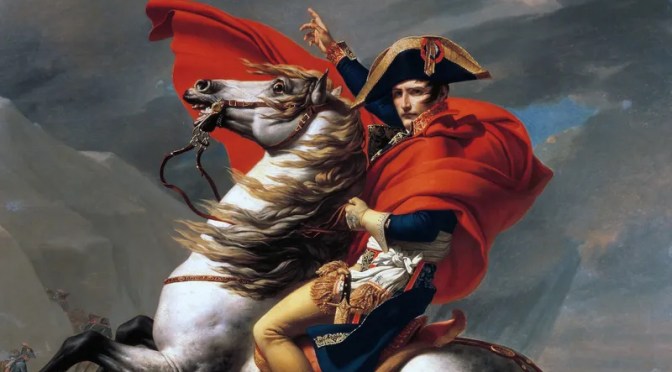
Napoleon Bonaparte: emperor, general, conqueror. At his height, France and therefore Napoleon controlled most of Western and Central Europe, as well as a colonial jewel box from the tip of South America to Indonesia second only to the British. Today, he’s largely remembered for two things: being short and being the first great example of why you don’t want to invade Russia in winter. The former is largely a misunderstanding: at 5’6”, Bonaparte was average height for a late 18th-century Frenchman, but tended to surround himself with taller generals, giving the appearance that he was shorter than the common man. The latter is a classic tale of hubris–Napoleon bet his profound gift for logistics and strategy against the resolute Russian army and their brutal climates, and lost. Unfortunately, this was all against the counsel of one of Napoleon’s greatest advisors: an ethereal dwarf known as ‘The Little Red Man of Destiny”.

Though possessing a rational mind hungry for planning and logistics, Bonaparte was also fascinated with the esoteric and otherworldly. He would regularly interpret and analyze his dreams for hidden meaning, and loved to tell ghost stories. He also claimed to be visited and advised many times by The Little Red Man, first appearing to him during the Egyptian Campaign in 1798. The creature offered Napoleon a deal: if he followed the strange man’s orders he would personally find success on the battlefield for the next ten years, and to convince the general the Little Man added that he had previously advised many of France’s greatest leaders.

“You have become far too ambitious,” the red man chided the general. “The French people are becoming wary of your overwhelming lust for power.”

“I have only ever done what was in the best interest of France and not my own, sir,” retorted Napoleon. “And how is it that you know so much of my plans?”

A smile crept across the little man’s face as he said, “I have been by your side since you were a boy. I know you better than you know yourself.”

Les Lutins

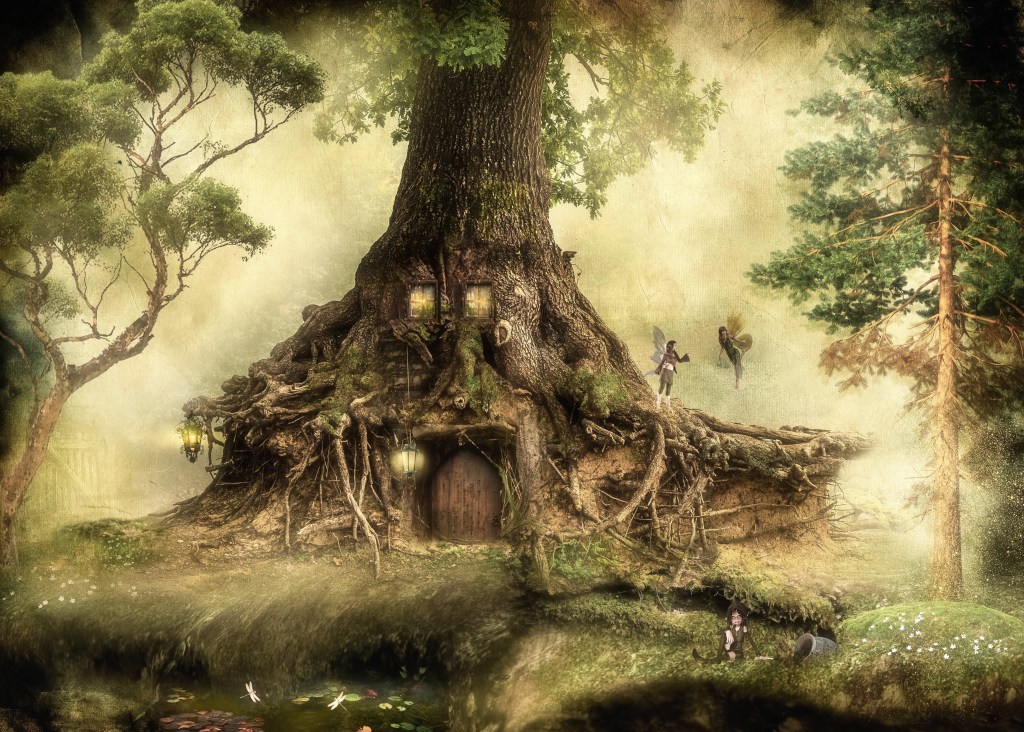
Descriptions of The Little Red Man are quite similar to another common figure in French folklore, les lutins. The lutins were said to be similar to British and Scandinavian folklore of house spirits like elves, gnomes, sprites, and hobgoblins. Occasionally they would appear as a saddled horse ready to be ridden, known as Le Cheval Bayard. Lutins are often blamed for tangling human or horse’s hair into knots while they sleep (often called elf-locks or fairy locks).

Image by Willgard Krause from Pixabay
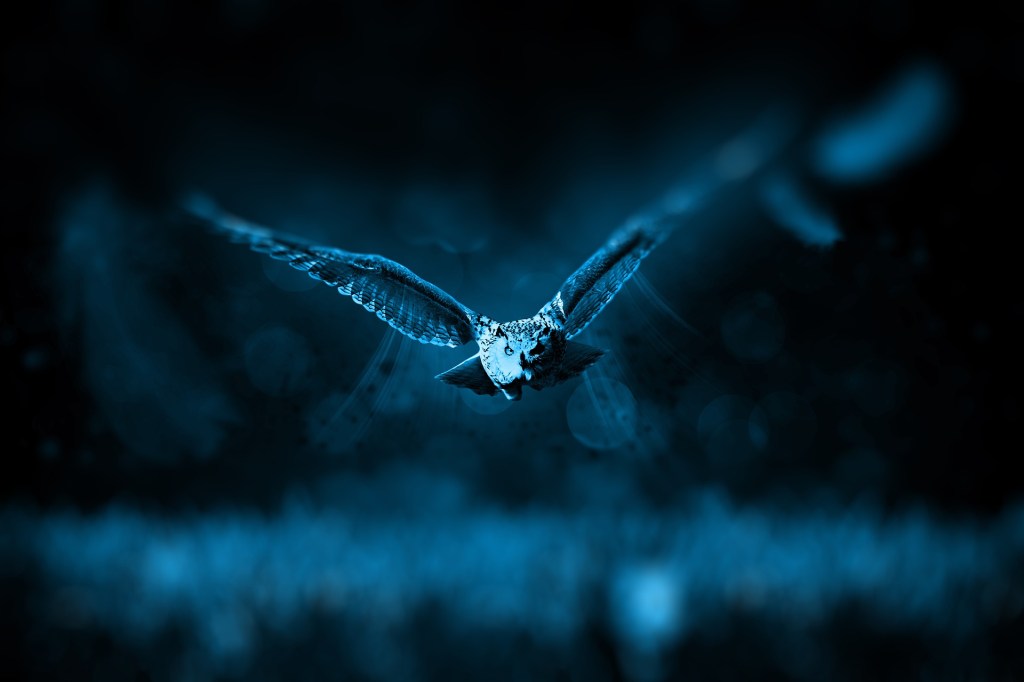
First appearing in literature between 1176 and 1181 by Benoît de Sainte-Maure as well as Wace, the lutin (also called luitin, nuiton, or netun in some texts) is described as a sea monster. In the early 14th century, “Le Chevalier de La Tour Landry” describes the ‘luitin’ as “a kind of demon, more mischievous than evil, who comes to torment people.” The name likely originates from Latin’s ‘Neptunus’, the Roman god of the seas, which in Late Latin became a catch-all term for all Pagan gods. The transition from netum to nuiton was probably influenced by Old French nuit (‘night’), and by the Old French luitier (‘to fight’).

Marie Catherine d’Aulnoy’sLe Prince Lutin” in 1697 delved deep into the world of the lutin, describing lutin of the air, earth, and water. In the story, one lutin describes what it is to be one of their own: “You are invisible when you like it; you cross in one moment the vast space of the universe; you rise without having wings; you go through the ground without dying; you penetrate the abysses of the sea without drowning; you enter everywhere, though the windows and the doors are closed; and, when you decide to, you can let yourself be seen in your natural form.”

As the French colonized the New World, the lore of the lutin came with them. In the Americas, though occasionally appearing as a dwarf adorned in red (more on that later), lutin largely shed their humanoid appearance and adopted forms more akin to pets and local animals that would hang around homes and farms. All-white cats in particular were expected to be lutin, but any animal of distinction that was observed to stay close to human domiciles was said to likely be a lutin.

The Little Red Man of Destiny

But what of Napoleon’s Little Red Man and his claims to have influenced French leaders? The first reported encounter was with Catherine de Medici, Queen of France from 1547 to 1559 and mother to three other French Kings. She reportedly came face-to-face with the Red Man during the construction of Tuileries Palace in 1564, described as a gnome-like creature in red clothing. Catherine considered him an uninvited guest, a spirit, and overall a bad omen.

The French Wikipedia entry for Tuileries attributes the Red Man to being the ghost of Jean l’Écorcheur, a butcher that was strangled by order of Catherine de Medici herself. Jean swore to Catherine’s astrologer, Cosme Ruggieri, that he would return and that all of Tuileries inhabitants would suffer grave misfortune.

Catherine and her family indeed lived through one of the French monarchy’s most turbulent times, beset by constant civil and religious war. Italian-born Catherine, raised to be Roman Catholic, was already a sore point to the Protestant French citizenry, and she eventually encouraged her son, King Charles IX, to massacre thousands of Huguenots during St. Batholomew’s Day in 1572, a pre-emptive attack out of fear of retaliation for the supposedly Spanish papal ambush of Admiral Gaspard de Coligny. The rest of Catherine’s life in the monarchy would be punctuated by bloodshed, loss, and heartbreak.

The next sighting of The Red Man would occur in 1610. He was seen by King Henry IV shortly before his assassination at the hands of Catholic zealot and schoolteacher François Ravaillac. Queen Anne d’Autriche ran across the sprite a few days before the Fronde, a series of bloody civil wars beginning in 1648. Chambermaids of King Louis XVI encountered the Red Man in the king’s bed in 1792 while the monarch was on the run, trying to evade revolutionaries. Later that same year, Louis’s wife Marie Antoinette saw the Red Man in the corridors of Tuileries on August 9th, just one day before the revolutionaries would storm the palace and end the monarchy. A few months later guards in La Square du Temple spotted the little man, the same prison in which Louis and Marie awaited their fate. In 1817, Tuileries Palace burned to the ground and with the monarchy eliminated, The Little Red Man moved on to his newest plaything, the man who would be Emperor, Napoleon Bonaparte.

Despite Napoleon’s success in Egypt, the Little Man informed him that the fleets were not following their orders, the Egyptian Campaign would stall, and by the time he returned to France he would find her beset on all sides by England, Russia, Turkey, and their European allies. As history shows, the Red Man’s claims all proved to be true.

Despite this setback, Napoleon appeared to remain in contact with the Little Red Man through the rest of his military career. The new government residing in Tuileries was well aware of Bonaparte’s stories of encountering the Red Man and it was claimed he visited him whenever the Emperor stayed in the Palace. A sworn affidavit by Counsellor of State Louis Mathieu Count Molé said that he had heard himself the Little Red Man of Destiny meet Bonaparte shortly after the Battle of Wagram.

Wagram was a hard-fought two-day onslaught against the British and Austrian Fifth Coalition and Napoleon’s own French, German, and Italian Imperials. After the struggle ended on July 6th, 1809, the Red Man appeared again to Napoleon at midnight in his Schönbrunn headquarters. The original ten years already expended, Napoleon begged the man for a five-year extension to his contract. The Little Man agreed, but this time added the caveat that Bonaparte must never launch a campaign in Russia. Of course, we’ve already covered how that went-–it resulted in the biggest defeat of Napoleon’s career, bigger than The Battle of Waterloo.

The Little Red Man’s final appearance was on the morning of January 1, 1814. Counsellor of State Molé was approached by the Red Man, demanding to see the emperor on matters of urgent importance. Napoleon had given strict orders to not be disturbed, but when he heard who was calling he approved the visit immediately. Napoleon begged the man for more time, enough to complete a handful of proposals, but the Red Man balked at his request. Instead, the Little Man told him that he had three months to achieve peace with his enemies, or there would be consequences.

Napoleon ignored the Little Man and instead launched a new eastward campaign that failed miserably, all but delivering France into the hands of the European allies. On April 1st, three months to the day of the Red Man’s warning, the Senate called for Napoleon’s abdication, and he spent the rest of his life in exile on the isle of Saint Helena.

Le Nain Rouge

There is another place with ties to France that has a history of encounters with a little red man, and that is the area around the former French colony of Detroit, Michigan. Detroit has a long-standing tradition of encounters with Le Nain Rouge, literally “the red dwarf”, a small man dressed all in red with a gift for prophecy and a fondness for human suffering. Sound familiar?

Image by Sven Lachmann from Pixabay

Long treated as a bad omen or sign of misfortune, the Nain Rouge first appears in literature in 1883 in Marie Caroline Watson Hamlin’s “Legends of Le Détroit”. She describes the little man as being “very red in the face, with a bright, glistening eye; instead of burning, it froze, instead of possessing depth emitted a cold gleam like the reflection from a polished surface, bewildering and dazzling all who came within its focus.” Charles M. Skinner’s “Myths And Legends Of Our Own Land” in 1886 also mention the Nain Rouge, characterizing him as “a shambling, red-faced creature, with a cold, glittering eye and teeth protruding from a grinning mouth.” Other accounts describe him as having an animal body but a man’s face with “blazing red eyes and rotten teeth” and covered in red and black furs.

While the lutin may originate in French tradition, it appears the Nain Rouge may have as much to do with Native American legends as it does the French. Some Native stories have identified the little red man as the “impish offspring of the Stone God”. French Christian Missionaries in the region that was to later become Detroit reported finding an Idol revered by the local natives, humanoid in appearance and painted red. Natives from the Erie Band referred to it as a Manitou, a Francofied version of the Algonquin word ‘monetoo’, a catch-all word for spirits and spiritual energies. Shortly after discovery by Europeans, they destroyed the idol with an axe that had been blessed by the missionary priests. Unfortunately, this ended up creating the opposite of the desired effect, as the natives declared the area cursed as a response to the colonists’ disrespect.

Antoine de la Mothe Cadillac was reportedly advised by a fortune teller that he must appease the Nain Rouge as part of the founding of Detroit in 1701, but ignored the warning and upon encountering the little man attacked him with his cane and yelled, “Get out of my way, you red imp!” Naturally, Cadillac suffered a string of misfortune afterwards. He was charged with abuse of power in Detroit and removed from his position, reassigned to Louisiana. Eventually he returned to France, where he was imprisoned and stripped of his fortune.

After that, the appearance of the Nain Rouge would portend disaster to European settlers and their kin, particularly in violent encounters with Native Americans. The little man was spotted shortly before the Battle of Bloody Run on July 30, 1763, where the British were killed by Chief Pontiac’s men from the Ottawa Tribe. The Nain Rouge was seen again shortly after the battle, dancing among the corpses on the banks of the Detroit River, which is said to have run red for days afterwards. When Governor William Hull surrendered Detroit in the War of 1812, the Nain Rouge was blamed on a series of misfortunes that put the city in such a position. Portentous Nain Rouge sightings have persisted until at least the 20th century, with reports of the creature coming shortly before the Riots of 1967, and again in 1976 shortly before an ice storm ravaged the area.

Image from detroitnews.com

Today, Detroit culture has made the Nain Rouge a local icon in its own right. Known as “The Demon of the Strait,” several local drinks are named after him and he has inspired a number of small budget films. Beginning in spring of 2010, Detroit has held an annual parade called the Marche du Nain Rouge, where the citizens “chase” the Nain Rouge out of town, often wearing masks and costumes so the dwarf won’t recognize them, banishing the little man from the city for another year.

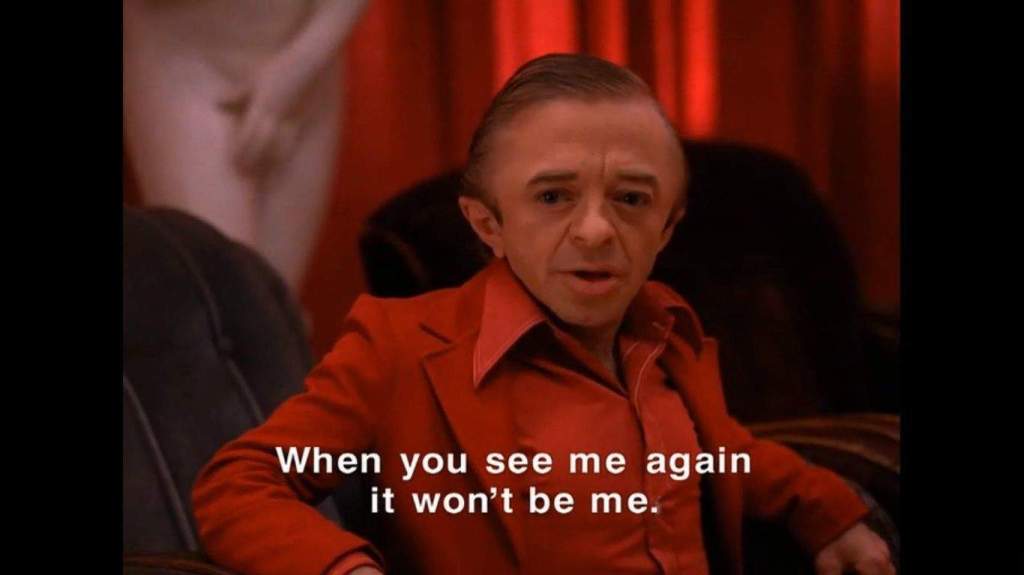
So is the Little Red Man of Destiny or the Nain Rouge still out there? The people of Detroit seem to think so, and in fairness the practice of running him out of town every year seems to coincide with the city turning its luck around. Without a French monarchy to harass, he seems to have removed himself from European politics. We may just have to wait for the next disaster to befall the former French empire before we know for sure. In the meantime, the little man in red dress will have to reside in folklore… and old Twin Peaks episodes.

(Disclaimer: David Lynch is not connected to the French monarchy in any way. I checked.)

The Ghost of Goose River Bridge

This tale originally appeared in Episode 003 – Salty Bill’s Limp Richard

One of our favorite ghosts here at Booze + Spirits, for reasons that are immediately apparent, is that of William Richardson, sometimes called “The Pitcher Man”…

Richard lived during the American Revolutionary War in Goose Creek, which today is part of Rockport, ME. During the war it was common for all the men of fit and fighting age to get sent off on the front lines, so small outlying communities like Goose River were often left solely to the care of the women, children, infirmed, and elderly. As you might imagine this made these small towns easy targets, and as such Goose River was often hounded by Redcoats looking to break support for the Revolutionaries by harassing locals and raiding homes for supplies.

Photo by Rusty Watson on Unsplash

Interestingly, rather than breaking the locals though, the constant harassment by their agitators instead inspired them to look for ways to cock things up for the annoying Brits wherever they could. (Plus ça change, plus c’est la même chose, non?) The remaining inhabitants of Goose River would often hide in the tree lines and take pot shots at Redcoat landing parties rowing to shore from their ships. A couple of the older men starting wreaking havoc by sitting just in earshot of the Redcoats, one playing roll call on his drum while the other yelled out military commands, giving the impression of regiments of Patriots nearby just out of sight. But it was the real star of the group, William Richardson, who would go down in local history for his actions.

One evening, American privateer Samuel Tucker had acquired a large shipment of tea from a poorly watched British vessel and as a result soon found himself being pursued by an imperial warship down the Maine coast. Being an avid fisherman and possessed with intimate knowledge of the narrow rocky island passes that dot the area, William Richardson came to Tucker’s aid, helping him navigate the hazardous coastline, and guiding him to a hiding spot near Harpswell.

Photo by Chris Henry on Unsplash

Harpswell lies in a channel in the middle of Sebascodegan Island, and the Brits were well aware of the dangerous, irregular channels throughout. Knowing that their warship couldn’t pursue Tucker through the treacherous passages, they decided instead to play a waiting game and set up a blockade, waiting for the moment Tucker and Richardson would inevitably have to come back out of hiding and attempt to flee to safety before daylight exposed their position. Tucker was worried, but William Richardson knew these seas and the more importantly the weather well, eventually convincing him they just needed to sit tight until the next storm.

Sure enough, a storm rolled in, and the squall demanded much of the Brits attention. Again, using that intimate knowledge of the local waters, Richardson and Tucker crept their vessels through the rough waters and escaped unseen past the blockade. By the time the Brits realized what had happened, Tucker was long gone and well on his way to the safety of Boston Harbor.

Photo by Evelyn Paris on Unsplash

When the war ended in 1783, all of Goose River celebrated, and none more than William Richardson. He threw a large party at his home, but as the last guest departed for the evening, he decided that was no reason to let the party die out. Richard set to grabbing a pitcher, filling it with ale, and began roaming into town, greeting folks in the streets, knocking on doors, and trying to rally some compatriot party-goers.

While crossing the Goose River bridge, Richardson ran across three men and approached them, as he had everyone he encountered that evening, to join in his festivities. Unbeknownst to him, these three were Tories–men still loyal to the British crown, and none too happy about the colonists recent victory. One man clubbed him in the head, and trio left him unconscious on the bridge, where he succumbed to his injury and died before someone else happened to find him.

Photo by Pixabay

Ever since then, Goose Creek bridge and its different incarnations and modernizations over the years have been haunted by Richardson, often seen staggering around, pitcher in-hand and looking for more party goers. He is often simply called ‘The Pitcher Man’.

The biggest spat of Pitcher Man sightings comes from the 1950’s, when the area became popular as a ‘Lover’s Lane’ spot for hot and bothered teens to park their car and get frisky where they wouldn’t be noticed by prying eyes. So they were all the more surprised to see a man in Revolutionary-era clothing stumble out of the woods, pitcher in-hand, and tapping on their car window looking for someone to share a drink with him. Reports of The Pitcher Man became such an issue that eventually a sign was posted on the site, reading “no trespassing between sunset and sunrise” (though some more skeptical folks might think it has more to do with the teenage canoodling).

Either way, an American hero and a ghost that never wants to see the party die is definitely a ghost that we here at Booze + Spirits feel is worthy of remembering and celebrating.

Cover photo by Eric Muhr on Unsplash

Image created with Microsoft Copilot Designer

Owl Women of North America

Curiously, the tales of human-sized monstrosities melding the features of humans and owls are found far and wide in the folklore of native tribes throughout North America.

The Apache, for instance have tales of ‘Big Owl’, a large, human sized owl that would eat children and transform into an ogre. He appears to have been used largely in a ‘boogeyman’ context, the kind of story meant to keep children from running out of view of watchful adults. The Choctaw told of an owl deity known as Ishkitini, the horned owl, who would hunt grown men and, like the Irish banshee, had a screech that served as a portent of death. The Wabanaki know of Cipelahq, a peculiar and dangerous bird spirit with the head and talons of a large owl while the rest of its body is invisible to the human eye.

Photo by Tengyart on Unsplash

But perhaps the most feared of the owl creatures are the subsects that can be collectively called ‘Owl Women’. Owl Women show up in the tales of many tribes, and can always be seen creeping about the outskirts of civilization. The common traits between them consist of being intelligent creatures, practicing dark magic, and a hunger for the flesh of humans.

La Lechuza

La Lechuza is told of mostly by tribes in Northern Mexico, though there is some spillover to some of the western tribes. La Lechuza is a witch than can transform into any animal it chooses, but tends to prefer a large owl or crow. “Lechuza” is often used interchangeably with “bruja”.

While most traditional Mexican legends can be traced to a root source, La Lechuza’s origins are lost in the haze of oral tradition and without a clear origin, as the legend seems to have spread between tribes that were long separated or had little contact with each other. The only thing known for sure is that the tale predates the conquistadors. One source suggests that Mexico largely regards birds of prey as evil, which is why lechuza (literally ‘owl’ in Spanish) takes the form of a bird of prey, but this interpretation seems highly dubious as an eagle devouring a snake is literally the symbol of Mexico.

Image by Jakub Zeman from Pixabay

In human form, lechuza are often seen wearing dresses made of ‘lechuzan’, or owl feathers. As an owl or other animal, they are a vaguely human sized version of the animal, but always with a woman’s head and animal body. As a bird of prey their giant talons are capable of lifting a man or even a moderate-sized car, according to some eyewitnesses. Vocally, they are capable of mimicking a large number of animals, but their own call is typically a series of eerie whistles, typically in threes.

The transformation from woman to beast has some interesting caveats. They may choose to transform their head along with the rest of their body if they wish, but they seem to suffer a diminishment of their powers by doing so, explaining their odd appearance. The lechuzas transformation is also peculiar in that they may change both at and against their will–perhaps an expression of a curse on the unwilling. But most transformations, even the undesired one, have an upside as lechuzas often get paid for their services.

La Lechuza can be either a woman who learns to turn into an owl or vice versa, and according to legend will only change form if paid to, otherwise they lose their power. Some stories claim that Las Lechuzas are the women that were murdered by their lovers and seek revenge. Others say they are just women who delve too deep into dark magics. One of the more popular explanations is that they were women who practiced witchcraft and were found out by the village, who exposed and killed them. These women swore revenge on all those that harmed them and anyone else that stands in their way. Supposedly there is an organized cabal of shapeshifting Lechuza women, so they can potentially hunt in packs if necessary.

Las Lechuzas are thought to feed on humans and will hunt them in the dark or try to lure them out of their homes by making the sounds of something in distress, like a crying baby or a kitten or puppy. Lechuza is thought to control the souls of men and often lead them to their death, though that aspect comes off a little cloudy, as La Lechuza is more about doing the job she is paid for rather than her own moral code. Her reputation for evil is more linked to her unnatural powers and her willingness to take on any task for payment rather than her own desires for revenge or suffering.

Photo by Stormseeker on Unsplash

Supposedly they only hunt people who have caused harm to women or have evil in their heart, so there is some relief there for the virtuous among us. Regardless of the individual though, seeing la lechuza is never a positive sign, and usually a portent of a coming tragedy. Unfortunately, even the eyewitnesses of la lechuza that were not attacked seldom seem to be long for this world, suffering seemingly unrelated accidents or violence shortly after.

More modern tales tell of La Lechuza involve the old ‘high strangeness’ chestnut of draining the power from a car battery, stranding a potential victim and forcing them to go for help on foot. Traditional tales speak of la lechuza having control over thunder and lightning, so there seem to be some interesting parallels there with control of electricity. Unusual thunderstorm patterns can be a sign that la lechuza is nearby, as well as spotting the shadow of a large bird, or even hearing birds singing at night.

Should you happen to find yourself hunted by la lechuza, the first rule is to never attack them head-on. They can easily overpower a human and are immune to non-magical weapons. Lines of salt will prevent their crossing, as it will most malevolent magics. Never make eye contact, as that is said to be how they gain control over your soul or in some cases learn to take your appearance. Funnily enough, they appear to hate to be sworn at, so the best defense against them is to let your foul mouth fly and it will likely run la lechuza off.

Photo by Anya Juárez Tenorio

Tah-tah-kle’-ah

Tah-tah-kle’-ah is a species of horrible and powerful owl women monsters talked about by the Yakama tribe form the territory today covering Southern Washington and Northern Oregon. There are many parallels with a creature called sne-nah by the Okanagans, whose territory was in nearby modern British Columbia. The most famous accounts of the tah-tah-kle’-ah come from an account taken by L.V. McWhorter from Yakama tribesman William Charley in 1918.

L.V. McWhorter was an early 20th-century farmer who became interested in the native culture of first the tribes in his native West Virginia and later in the plateau tribes of Washington. He recorded many of their tales and became a vocal advocate for the mistreatment these tribes suffered at the hands of the American government. Though an amateur, his early dedication to recording the native tales long before many other white men cared to has earned his writings a place in the Washington State University special collections.

Unfortunately, my investigation of William Charlie turned up nothing, but the following story is reportedly in his words:

“Before the tribes lived peaceably in this country, before the last creation, there were certain people who ate Indians whenever they could get them. They preferred and hunted children, as better eating.

Photo by Paul Kerby Genil

“These people, the Tah-tah kle’ -ah, were taller and larger than the common human. They ate every bad thing known such as frogs, lizards, snakes, and other things that Indians do not eat. They talked the Indian language, and in that way might fool the Indians. There were five of them, all sisters. But at the last creation they came up only in California. Two were seen there. They were women, tall big, women, who lived in a cave.

“One time the Shastas (Shasta Indians) were digging roots and camped. They knew that the two Tah-tah kle’ -ah were about, were in that place. The Indians were careful, but the Tah-tah kle’-ah caught one little boy, not to eat, but to raise up and live with them. The boy thought he would be killed, but he was not.

“The Tah-tah kle’-ah had him several days. One day, when they were out of sight, the boy hurried away. He ran fast, traveled over rough, wild places, and at last reached his own people.

Photo by Elle Cartier on Unsplash

“After many years the two Tah-tah-kle’-ah were destroyed. None knew how, but perhaps by a higher power. Their cave home became red hot and blew out. The monster-women were never seen again, never more heard of but they have always been talked about as the most dangerous beings on earth.

“One other of the five sisters was drowned. From her eye, all owls were created. The person or power that killed her said to her, ‘From now on, your eye will be the only part of you to act. At night it will go to certain birds, the owls’.

“Owl [Sho-pow’-tan] was the man. He was a big chief who lived at Po-ye-koosen.  He went up the Naches [river?] to hunt deer. Many men went with him. They hunted all one sun, and when evening came, Owl did not return to camp. The hunters called to each other, ‘Owl is not here! Owl is away! Owl is lost!’

Tah-tah-kle’-ah, the evil old woman with her basket, heard that call in the twilight, ‘Owl is lost!’ And she said to her four sisters, ‘We must go hunt Owl who is lost from his people. We will get him for ourselves’.

Image by Erik Karits from Pixabay
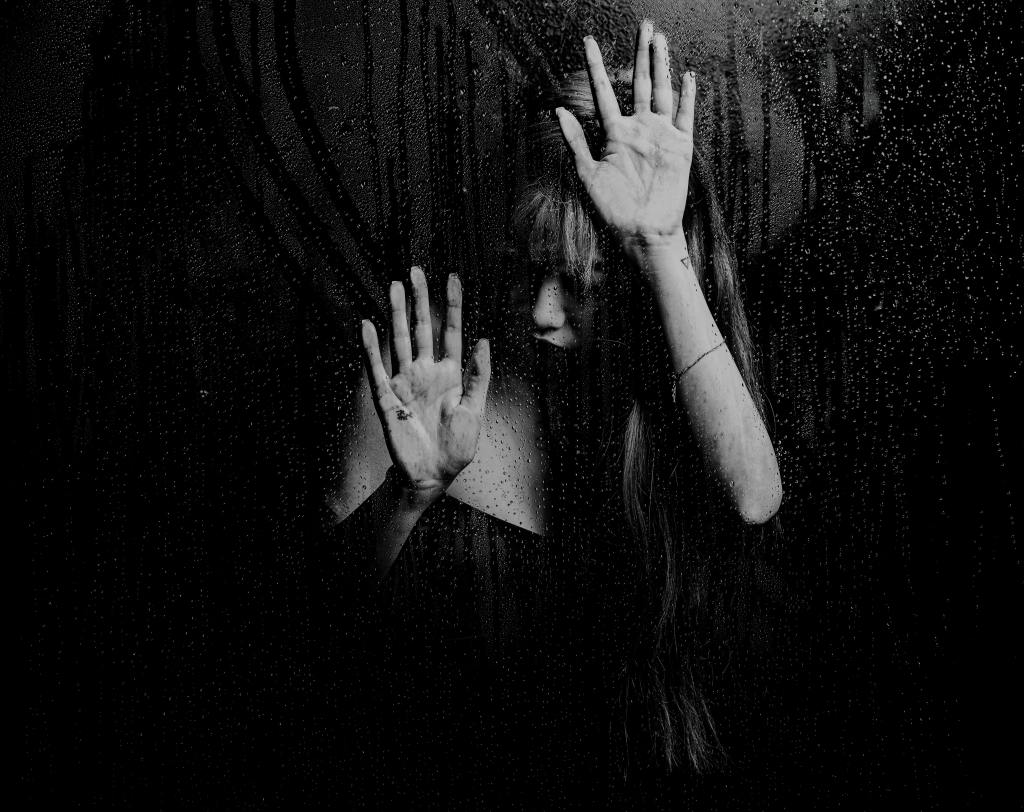
“Owl knew that Tah-tah-kle’-ah was coming for him; so he went up to a hollow place in the Tic-te’ ah. You can see the trail that he traveled up the face of the rock to the cave high up in the wall of Tic-te’ ah. Grass is growing along the narrow trail. You can see it when you are out from the rock where it winds up the cliff.

“Owl had killed a deer. He filled the tripe with the blood of the deer. He heard Tah-tah-kle’-ah coming, and he knew she would kill him. He knew, and he placed the blood-filled tripe in front of him. Tah-tah-kle’-ah entered the mouth of the cave. She looked. It was dark, but she saw it, the strange thing lying there. She did not know. She was afraid. She called to Owl, ‘Take it away! I do not like it!’

“Owl said, ‘No! That is something powerful, step over it.’ Tah-tah-kle’-ah did as told, stepped her foot over the tripe. Owl was ready. He did not get up. He sat there; and when the Tah-tah-kle’-ah stepped, he punched the tripe with his stick. He punched it often and it went, ‘Kloup! kloup! Kloup!’

“Tah-tah-kle’-ah was scared! she screamed, threw up her hands, and fell from the cliff. The wana [river] ran by the base of the cliff, deep and swift. Tah-tah-kle’-ah fell into the water and was killed.”

Photo by Dark Indigo

Stikini

The Stikini is a terrifying vampiric owl-person primarily known to the Seminole people of modern Florida, though there is some overlap with the Creek of modern Oklahoma, and the tale has spread some to swamp inhabiting tribes in New Jersey and Michigan.

Stikini are witches that have transformed themselves into giant undead owl-like monsters. These reanimated dead spend the nights hunting for human hearts to devour, and to hear their cry is to be marked for imminent death. Much like the infamous Skinwalkers among the Navajo tribe, the Seminole rarely speak their name, for fear of attracting their attention.

Photo by Ksenia Yakovleva on Unsplash

The stikini are completely indistinguishable from normal humans in the daytime, but at nighttime they vomit up their internal organs, blood, and soul, which is what allows them to transform into great horned owls and go hunting for sleeping humans. As with la lechuza, stikini can transform into any animal they wish, but prefer the visage of a giant owl. They hide their organs and innards up in the treetops to keep animals from eating them as well as away from others who would do them harm.

The stikini removes its victim’s heart through their mouth and returns with it to their lair where they cook it in an enchanted pot. Afterwards they can consume it and absorb their victim’s life force. Before sunrise, they must regather and swallow all their innards to again return to their human guise.

To defeat a stikini, one must first locate its organs. You can try to hide them or keep them from the stikini, as sunlight will destroy them if the sun rises before they have transformed back into human form, but a stikini will be able to sense its organs’ location and you may have vicious life-and-death battle on your hands. The safest method of killing a stikini is said to be to prepare magical arrows, decorated with owl feathers, blessed and dressed with sacred herbs. Then wait near the stikini’s organs and shoot the monster while it is swallowing its organs. This appears to be when it is at its most vulnerable.

Cover photo by Dušan veverkolog on Unsplash

Photo by Seats Photographix

Wolf Creek Inn

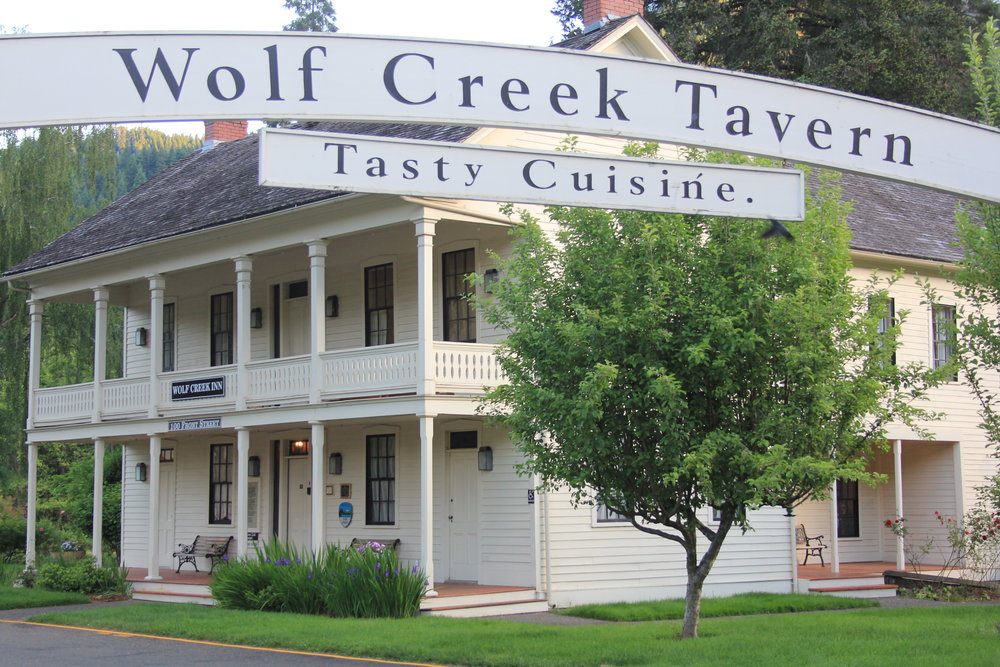
The Wolf Creek Inn lies in Wolf Creek, OR, just off Interstate 5 on Exit 71. It is a two-story Classic Revival style clapboard inn that serves as a bed and breakfast, restaurant, community event center, and museum. Wolf Creek Inn is the longest still-running inn and restaurant in Oregon history.

The lodge began life as a clap-board lodge built in the early 1850’s offering rest along the Applegate Trail. In 1883 it was converted from a “Six Bit House” into a first-class hotel by orchardist Henry Smith. Pear and apple trees survive to this day near the Inn that were originally planted by Smith. Christened the “Wolf Creek Tavern”, the stagecoach stop was built up with 16 rooms, separate men and women’s parlors, a dining room, and a deluxe outhouse just outside the back door as a respite along the sixteen-day coach route between Portland and San Francisco.

Image from Wolf Creek Inn’s website

Working cowboys would be allowed to stay in the attic for 10-cents a night, but the attic was unfloored, leaving only a “shelf” of two or three boards around the perimeter of the attic for the cowboys to sleep. To keep from rolling off in their sleep, the cowboys would jam their spurs into the rafters, the marks of which still remain. In 1925, then owners John and Dinky Dougal constructed the South Wing along with the famous “Tasty Cuisine” sign, and the inn grew in popularity as a retreat for writers, artists, and actors.

Famous guests to Wolf Creek Inn include: Mary Pickford, Douglas Fairbanks, Orson Welles, John Wayne, Sir Anthony Hopkins, Sinclair Lewis, and President Rutherford B. Hayes. The entire cast of “Gunsmoke” stayed in the inn once while shooting an episode in the nearby ghost town of Golden. Clarke Gable and Carole Lombard were said to be regulars of the establishment, Gable famously befriending the innkeeper and regularly slipping away to go fishing on the Rogue River. Some claim that Clark would occasionally sneak off to Wolf Creek for extramarital dalliances, but it’s also claimed Gable came here to grieve after Lombard’s passing.

Photo by Caleb Falkenhagen

Jack London was one of the inn’s most frequent lodgers and spent an entire summer there with his second wife while he wrote the short story “The End of the Story” and finished “Valley of the Moon”. His room has been preserved to appear much as it would have during his visits, and some say his ghost returned to the Inn after his death in 1916. Guests have reported encountering London’s apparition in his room, and his voice has been heard as well.

Dinky Dougal gave birth to their daughter Jane in the Mary Pickford room. Jane revisited the Inn in the late 1900’s and recalled how Dinky’s cooking would attract the wolves nearby to hang out in the yard, hoping for a snack. Wolf Creek was named naturally for the large number of wolves in the area at its founding, and guests to the inn in early days were each given a chamber pot for use during the night, since leaving the safety of the building to use the outhouse could be hazardous. The last recorded sighting of a wolf near the Inn was 1956.

Another commonly encountered ghost is the spirit of a female stagecoach driver, who people like to associate with One-Eyed Charley. ‘One-Eyed Charley’ Parkhurst was a well-known stagecoach driver on the roads south of Oregon during the Gold Rush. Charley had a reputation for being a real roughneck, described as a man that “drove his team hard, spat his tobacco juice harder, and cussed like Sam Clemens”. Charley registered to vote for the first time in 1868 to cast a ballot for Ulysses S. Grant and was known to only miss work on the day after payday (due to being hungover).

Image by Sabrina Eickhoff from Pixabay

When One-Eyed Charley died at the age of 67, the mortician was shocked to learn that ‘Charley’ was actually ‘Charlotte’. Originally an orphan girl, Charley left the orphanage and got into stagecoach driving by dressing and acting like a man. Since Charley proudly voted for Grant in 1868, that potentially makes her the first woman in the US to vote in a presidential election.

The lady stagecoach driver’s voice is often said to be heard in the building when no one is around. She is described as sounding like a little kid singing, kind of playing around, and is often seen in the window from outside. It has not escaped more astute historians that there is one major hang-up in the story: One-Eyed Charley died in 1879, before the Inn was constructed. But since the Inn was converted from the original clapboard lodge form the 1850’s, perhaps there’s enough leeway to not squelch the story out over that detail just yet.

Other ghosts reported include a young woman who has been seen in Clark Gable’s room, and an older man who has been seen inside the building. Both have been caught on EVPs. The building has the full complement of randomized haunting reports: doors opening and closing, phantom scents, lights flickering, piano playing, small items moving on their own. Children are sometimes heard playing in the Ballroom. EVP’s captures are not uncommon for paranormal investigators, including one that reportedly said the name “Beulah”, so there’s speculation that it might be one of the spirits’ names. The kitchen is often reported to have items thrown around the room or people preparing meals may brush across someone who isn’t there. Some guess Dinky Dougal is still overseeing food preparation in the kitchen that meant the world to her.

Image by Eden Moon from Pixabay
A more sinister spirit has also been described on the grounds and even within the inn, described as a “vampire-like creature” with the stature of a small man, with ghoulish fangs and blood around its mouth. It has been suggested to be a spirit-of-the-woods or some kind of cryptid, but most people reckon that it is simply the ghost of a mentally disturbed person wishing for witnesses to perceive him as a monster.

There are a few amateur paranormal investigations of Wolf Creek Inn on YouTube one can sift through, and they are about what you would expect: people fumbling to use tarot cards and dowsing rods they’ve never touched before, using ghost hunting phone apps and identifying EVPs that somehow don’t turn up in editing.

Photo by Dan Meyers on Unsplash

There is also an investigation by paranormal punching bags and douche squad extraordinaire, Ghost Adventures. Zak Bagans, of course, is on the scene for all of six minutes before finding a “portal” no one else in all of history has identified, decides that the reported little girl ghost is actually a demon in disguise protecting the portal, and then spends the rest of the episode going after this demon that only he has ever identified there.

In the 1960’s Interstate 5 came through the area, pulling away customers that would go directly past the Inn on old Highway 99, but being only a few hundred feet away from I-5 kept it in close enough proximity to survive. It was added to the National Registry of Historic Places in 1972, and in 1979, the Oregon Department of Parks & Recreation purchased the Inn to gave it a complete historic renovation. Today, the Inn still takes lodgers (ghost hunting tourists should try to get a reservation in Rooms 6, 8, or 9), and offers self-guided tours of the building Thursday thru Sunday.

Featured image by Marek Szturc on Unsplash

Image by Pexels from Pixabay

Ep. 30 – An Aggressive Family Chritsmas

It’s a Christmas miracle! A new episode of The Booze + Spirits Podcast!

Finally, the episode recorded in December 2021 is available in December 2022 (we make no promise to be timely with our jokes, references, or new stories). And it’s getting Dickensian in here, as we pick tell stories inspired by Scrooge’s famous ghosts: Caity takes up to the past of cannibalistic European satanists in a story she only discovered in her present, Mel tells us about present ghosts (by rehashing the past in stories we told last year), and Nick tells us of how Sharon Tate in the past saw her own future in the ghost that predicted her future. Honestly, this whole episode is chronally instable.

You can find the recipe for Manson Christmas Punch here.

Like the podcast? Want more? Tell a friend! You can also support our show by shopping our Teepublic store, donating through Anchor, or subscribing to our Patreon! Your support allows us the freedom to create more, bigger, and better content! 

Find and follow The Booze + Spirits Podcast on Facebook, Instagram, and Twitter!

And be sure to rate, review, and subscribe through Anchor, Apple, Spotify, Google, YouTube, or the podcast delivery system of your choice!

Nick’s background music is “This Christmas” by Dott, used under license CC BY-NC-SA 3.0. Opening bells from “Christmas on an Island” by junior85, used under license CC BY-NC-SA 3.0. Opening song is “Come Back Down” by The Lonely Wild, licensed through audiio.

Featured image photo by Lucas Quaresma on Unsplash

Remember to drink responsibly and in accordance with your local laws. Don’t end up our next ghost!

Clip Show: We’re Not Dead Yet!

Your eyes are not deceiving you, it’s a Booze + Spirits Podcast! Almost. We have not yet returned to the recording booth, but that doesn’t mean the show isn’t on our minds, and we’re flabbergasted to see that we’re still acquiring new listeners for a show that hasn’t put out new content for a dragonfly’s age. So, to let you know that we haven’t forgotten you all, here’s another clip show of bits left from the editing bay floor, and like last time, it’s been punctuated with the chaotic tones of a French post-punk band; this time, Ultrademon! (We amuse ourselves.) Hang tight, and we hope to see you with new, actual real episodes sometime in the near future!

Like the podcast? Want more? Tell a friend! You can also support our show by shopping our Teepublic store, donating through Anchor, or subscribing to our Patreon! Your support allows us the freedom to create more, bigger, and better content!

Find and follow The Booze + Spirits Podcast on Facebook, Instagram, and Twitter!

And be sure to rate, review, and subscribe through Anchor, Apple, Spotify, Google, YouTube, or the podcast delivery system of your choice!

Theme music is “Come Back Down” by The Lonely Wild, licensed through audiio.

“Ultra Neuf Trois”, “PIQURE”, “TETE BLONDE RUSSE”, and “SORS” by Ultrademon are used under Creative Commons BY-NC-ND 4.0. “High Five” by Desmond & The Tutus is used under Creative Commons BY-NC-SA 3.0.

Featured photo by Vasily Koloda on Unsplash

Remember to drink responsibly and in accordance with your local laws. Don’t end up our next ghost!

Ep. 29 – Six Gentiles Walk Into a Whale

Show Notes

Better late than never, said the person who sucks at online analytics… The part-time job known as Christmas is over, and we’ve finally had time to edit the episodes we recorded before Christmas.

First up, in our salute to Hanukah, we talk vaguely about some Jewish spirts and demons in between bursts of spouting off pointless facts like the big-headed autistic kid from Jerry Maguire. Cait has a haunted synagogue, Nick compares a historical possession tale to teachings of the Talmud, and Mel has new uses for cat afterbirth. It’s an episode less offensive than you would have thought, but more offensive than you would have hoped.

Get the recipe for the Shiksa Swill here!

The Paranormal & Ghost Society’s investigation of Amherst Synagogue

Like the podcast? Want more? Tell a friend! You can also support our show by shopping our Teepublic store, donating through Anchor, or subscribing to our Patreon! Your support allows us the freedom to create more, bigger, and better content! 

Find and follow The Booze + Spirits Podcast on Facebook, Instagram, and Twitter!

And be sure to rate, review, and subscribe through Anchor, Apple, Spotify, Google, YouTube, or the podcast delivery system of your choice!

Theme music is “Come Back Down” by The Lonely Wild, licensed through audiio.

Remember to drink responsibly and in accordance with your local laws. Don’t end up our next ghost!

Ep. 28 – Hominid Battle Royale

Show Notes

It’s Thanksgiving here at The Booze + Spirits Podcast, and we celebrate it like most Americans–by being painfully unaware of the plight of Native Americans and having a big blow-out fight with family members. After a few tales of Native American lore, Nick goads Cait into storming out. Afterwards, Nick and Mel ‘go for a walk with the cousins’ and ramble on about proto-man behavior including Bigfoot, Wendigos, and Facebook. Like a Thanksgiving dinner, it goes on too long and makes you wonder what else you could be doing right now if you didn’t feel so guilty obligated. Happy Turkey Day!

Like the podcast? Want more? Tell a friend! You can also support our show by shopping our Teepublic store, donating through Anchor, or subscribing to our Patreon! Your support allows us the freedom to create more, bigger, and better content! 

Find and follow The Booze + Spirits Podcast on Facebook, Instagram, and Twitter!

And be sure to rate, review, and subscribe through Anchor, Apple, Spotify, Google, YouTube, or the podcast delivery system of your choice!

Theme music is “Come Back Down” by The Lonely Wild, licensed through audiio.

Featured image photo by Meritt Thomas on Unsplash

Remember to drink responsibly and in accordance with your local laws. Don’t end up our next ghost!

Ep. 27 – Dalrymple in Time

Show Notes

Put on your tam, grab your bagpipes, and wear your kilt commando style, because we’re headed to the highlands for this episode of The Booze + Spirits Podcast! We’re discussing the spirits of Scotland in this episode, ‘Mel!’ gives us a tour of a creepy castle and its green lady, Nick rants about government betrayal on a ghostly glen, and Cait finishes our journey by warming our tired bones with a pastoral hot toddy.

Like the podcast? Want more? Tell a friend! You can also support our show by shopping our Teepublic store, donating through Anchor, or subscribing to our Patreon! Your support allows us the freedom to create more, bigger, and better content! 

Find and follow The Booze + Spirits Podcast on Facebook, Instagram, and Twitter!

And be sure to rate, review, and subscribe through Anchor, Apple, Spotify, Google, YouTube, or the podcast delivery system of your choice!

Theme music is “Come Back Down” by The Lonely Wild, licensed through audiio.

“Dobro Mash” by Audionautix is licensed under a Creative Commons Attribution 4.0 license. https://creativecommons.org/licenses/by/4.0/  Artist: http://audionautix.com/

Featured image photo by Connor Mollison on Unsplash

Remember to drink responsibly and in accordance with your local laws. Don’t end up our next ghost!