Tag Archives: legend

Owl Women of North America

Curiously, the tales of human-sized monstrosities melding the features of humans and owls are found far and wide in the folklore of native tribes throughout North America.

The Apache, for instance have tales of ‘Big Owl’, a large, human sized owl that would eat children and transform into an ogre. He appears to have been used largely in a ‘boogeyman’ context, the kind of story meant to keep children from running out of view of watchful adults. The Choctaw told of an owl deity known as Ishkitini, the horned owl, who would hunt grown men and, like the Irish banshee, had a screech that served as a portent of death. The Wabanaki know of Cipelahq, a peculiar and dangerous bird spirit with the head and talons of a large owl while the rest of its body is invisible to the human eye.

Photo by Tengyart on Unsplash

But perhaps the most feared of the owl creatures are the subsects that can be collectively called ‘Owl Women’. Owl Women show up in the tales of many tribes, and can always be seen creeping about the outskirts of civilization. The common traits between them consist of being intelligent creatures, practicing dark magic, and a hunger for the flesh of humans.

La Lechuza

La Lechuza is told of mostly by tribes in Northern Mexico, though there is some spillover to some of the western tribes. La Lechuza is a witch than can transform into any animal it chooses, but tends to prefer a large owl or crow. “Lechuza” is often used interchangeably with “bruja”.

While most traditional Mexican legends can be traced to a root source, La Lechuza’s origins are lost in the haze of oral tradition and without a clear origin, as the legend seems to have spread between tribes that were long separated or had little contact with each other. The only thing known for sure is that the tale predates the conquistadors. One source suggests that Mexico largely regards birds of prey as evil, which is why lechuza (literally ‘owl’ in Spanish) takes the form of a bird of prey, but this interpretation seems highly dubious as an eagle devouring a snake is literally the symbol of Mexico.

Image by Jakub Zeman from Pixabay

In human form, lechuza are often seen wearing dresses made of ‘lechuzan’, or owl feathers. As an owl or other animal, they are a vaguely human sized version of the animal, but always with a woman’s head and animal body. As a bird of prey their giant talons are capable of lifting a man or even a moderate-sized car, according to some eyewitnesses. Vocally, they are capable of mimicking a large number of animals, but their own call is typically a series of eerie whistles, typically in threes.

The transformation from woman to beast has some interesting caveats. They may choose to transform their head along with the rest of their body if they wish, but they seem to suffer a diminishment of their powers by doing so, explaining their odd appearance. The lechuzas transformation is also peculiar in that they may change both at and against their will–perhaps an expression of a curse on the unwilling. But most transformations, even the undesired one, have an upside as lechuzas often get paid for their services.
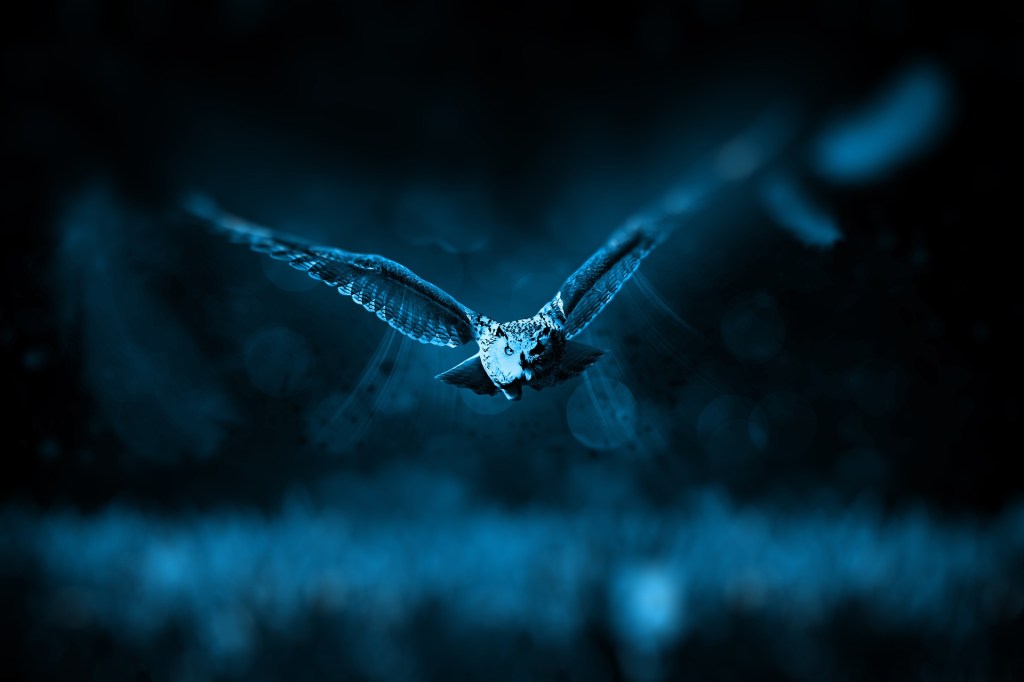
La Lechuza can be either a woman who learns to turn into an owl or vice versa, and according to legend will only change form if paid to, otherwise they lose their power. Some stories claim that Las Lechuzas are the women that were murdered by their lovers and seek revenge. Others say they are just women who delve too deep into dark magics. One of the more popular explanations is that they were women who practiced witchcraft and were found out by the village, who exposed and killed them. These women swore revenge on all those that harmed them and anyone else that stands in their way. Supposedly there is an organized cabal of shapeshifting Lechuza women, so they can potentially hunt in packs if necessary.

Las Lechuzas are thought to feed on humans and will hunt them in the dark or try to lure them out of their homes by making the sounds of something in distress, like a crying baby or a kitten or puppy. Lechuza is thought to control the souls of men and often lead them to their death, though that aspect comes off a little cloudy, as La Lechuza is more about doing the job she is paid for rather than her own moral code. Her reputation for evil is more linked to her unnatural powers and her willingness to take on any task for payment rather than her own desires for revenge or suffering.
Photo by Stormseeker on Unsplash

Supposedly they only hunt people who have caused harm to women or have evil in their heart, so there is some relief there for the virtuous among us. Regardless of the individual though, seeing la lechuza is never a positive sign, and usually a portent of a coming tragedy. Unfortunately, even the eyewitnesses of la lechuza that were not attacked seldom seem to be long for this world, suffering seemingly unrelated accidents or violence shortly after.

More modern tales tell of La Lechuza involve the old ‘high strangeness’ chestnut of draining the power from a car battery, stranding a potential victim and forcing them to go for help on foot. Traditional tales speak of la lechuza having control over thunder and lightning, so there seem to be some interesting parallels there with control of electricity. Unusual thunderstorm patterns can be a sign that la lechuza is nearby, as well as spotting the shadow of a large bird, or even hearing birds singing at night.

Should you happen to find yourself hunted by la lechuza, the first rule is to never attack them head-on. They can easily overpower a human and are immune to non-magical weapons. Lines of salt will prevent their crossing, as it will most malevolent magics. Never make eye contact, as that is said to be how they gain control over your soul or in some cases learn to take your appearance. Funnily enough, they appear to hate to be sworn at, so the best defense against them is to let your foul mouth fly and it will likely run la lechuza off.

Photo by Anya Juárez Tenorio

Tah-tah-kle’-ah

Tah-tah-kle’-ah is a species of horrible and powerful owl women monsters talked about by the Yakama tribe form the territory today covering Southern Washington and Northern Oregon. There are many parallels with a creature called sne-nah by the Okanagans, whose territory was in nearby modern British Columbia. The most famous accounts of the tah-tah-kle’-ah come from an account taken by L.V. McWhorter from Yakama tribesman William Charley in 1918.

L.V. McWhorter was an early 20th-century farmer who became interested in the native culture of first the tribes in his native West Virginia and later in the plateau tribes of Washington. He recorded many of their tales and became a vocal advocate for the mistreatment these tribes suffered at the hands of the American government. Though an amateur, his early dedication to recording the native tales long before many other white men cared to has earned his writings a place in the Washington State University special collections.

Unfortunately, my investigation of William Charlie turned up nothing, but the following story is reportedly in his words:

“Before the tribes lived peaceably in this country, before the last creation, there were certain people who ate Indians whenever they could get them. They preferred and hunted children, as better eating.

Photo by Paul Kerby Genil

“These people, the Tah-tah kle’ -ah, were taller and larger than the common human. They ate every bad thing known such as frogs, lizards, snakes, and other things that Indians do not eat. They talked the Indian language, and in that way might fool the Indians. There were five of them, all sisters. But at the last creation they came up only in California. Two were seen there. They were women, tall big, women, who lived in a cave.

“One time the Shastas (Shasta Indians) were digging roots and camped. They knew that the two Tah-tah kle’ -ah were about, were in that place. The Indians were careful, but the Tah-tah kle’-ah caught one little boy, not to eat, but to raise up and live with them. The boy thought he would be killed, but he was not.

“The Tah-tah kle’-ah had him several days. One day, when they were out of sight, the boy hurried away. He ran fast, traveled over rough, wild places, and at last reached his own people.
Photo by Elle Cartier on Unsplash

“After many years the two Tah-tah-kle’-ah were destroyed. None knew how, but perhaps by a higher power. Their cave home became red hot and blew out. The monster-women were never seen again, never more heard of but they have always been talked about as the most dangerous beings on earth.

“One other of the five sisters was drowned. From her eye, all owls were created. The person or power that killed her said to her, ‘From now on, your eye will be the only part of you to act. At night it will go to certain birds, the owls’.

“Owl [Sho-pow’-tan] was the man. He was a big chief who lived at Po-ye-koosen.  He went up the Naches [river?] to hunt deer. Many men went with him. They hunted all one sun, and when evening came, Owl did not return to camp. The hunters called to each other, ‘Owl is not here! Owl is away! Owl is lost!’

Tah-tah-kle’-ah, the evil old woman with her basket, heard that call in the twilight, ‘Owl is lost!’ And she said to her four sisters, ‘We must go hunt Owl who is lost from his people. We will get him for ourselves’.
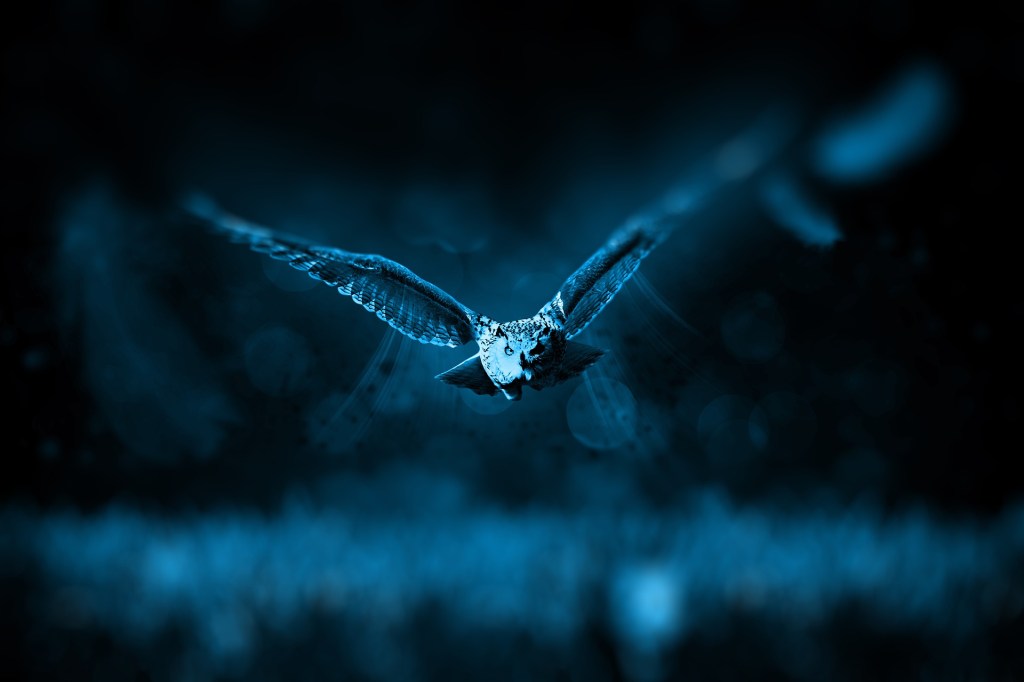
Image by Erik Karits from Pixabay

“Owl knew that Tah-tah-kle’-ah was coming for him; so he went up to a hollow place in the Tic-te’ ah. You can see the trail that he traveled up the face of the rock to the cave high up in the wall of Tic-te’ ah. Grass is growing along the narrow trail. You can see it when you are out from the rock where it winds up the cliff.

“Owl had killed a deer. He filled the tripe with the blood of the deer. He heard Tah-tah-kle’-ah coming, and he knew she would kill him. He knew, and he placed the blood-filled tripe in front of him. Tah-tah-kle’-ah entered the mouth of the cave. She looked. It was dark, but she saw it, the strange thing lying there. She did not know. She was afraid. She called to Owl, ‘Take it away! I do not like it!’

“Owl said, ‘No! That is something powerful, step over it.’ Tah-tah-kle’-ah did as told, stepped her foot over the tripe. Owl was ready. He did not get up. He sat there; and when the Tah-tah-kle’-ah stepped, he punched the tripe with his stick. He punched it often and it went, ‘Kloup! kloup! Kloup!’

“Tah-tah-kle’-ah was scared! she screamed, threw up her hands, and fell from the cliff. The wana [river] ran by the base of the cliff, deep and swift. Tah-tah-kle’-ah fell into the water and was killed.”

Photo by Dark Indigo

Stikini

The Stikini is a terrifying vampiric owl-person primarily known to the Seminole people of modern Florida, though there is some overlap with the Creek of modern Oklahoma, and the tale has spread some to swamp inhabiting tribes in New Jersey and Michigan.

Stikini are witches that have transformed themselves into giant undead owl-like monsters. These reanimated dead spend the nights hunting for human hearts to devour, and to hear their cry is to be marked for imminent death. Much like the infamous Skinwalkers among the Navajo tribe, the Seminole rarely speak their name, for fear of attracting their attention.

Photo by Ksenia Yakovleva on Unsplash

The stikini are completely indistinguishable from normal humans in the daytime, but at nighttime they vomit up their internal organs, blood, and soul, which is what allows them to transform into great horned owls and go hunting for sleeping humans. As with la lechuza, stikini can transform into any animal they wish, but prefer the visage of a giant owl. They hide their organs and innards up in the treetops to keep animals from eating them as well as away from others who would do them harm.

The stikini removes its victim’s heart through their mouth and returns with it to their lair where they cook it in an enchanted pot. Afterwards they can consume it and absorb their victim’s life force. Before sunrise, they must regather and swallow all their innards to again return to their human guise.

To defeat a stikini, one must first locate its organs. You can try to hide them or keep them from the stikini, as sunlight will destroy them if the sun rises before they have transformed back into human form, but a stikini will be able to sense its organs’ location and you may have vicious life-and-death battle on your hands. The safest method of killing a stikini is said to be to prepare magical arrows, decorated with owl feathers, blessed and dressed with sacred herbs. Then wait near the stikini’s organs and shoot the monster while it is swallowing its organs. This appears to be when it is at its most vulnerable.

Cover photo by Dušan veverkolog on Unsplash
Photo by Seats Photographix

Ep. 29 – Six Gentiles Walk Into a Whale

Show Notes

Better late than never, said the person who sucks at online analytics… The part-time job known as Christmas is over, and we’ve finally had time to edit the episodes we recorded before Christmas.

First up, in our salute to Hanukah, we talk vaguely about some Jewish spirts and demons in between bursts of spouting off pointless facts like the big-headed autistic kid from Jerry Maguire. Cait has a haunted synagogue, Nick compares a historical possession tale to teachings of the Talmud, and Mel has new uses for cat afterbirth. It’s an episode less offensive than you would have thought, but more offensive than you would have hoped.

Get the recipe for the Shiksa Swill here!

The Paranormal & Ghost Society’s investigation of Amherst Synagogue

Like the podcast? Want more? Tell a friend! You can also support our show by shopping our Teepublic store, donating through Anchor, or subscribing to our Patreon! Your support allows us the freedom to create more, bigger, and better content! 

Find and follow The Booze + Spirits Podcast on Facebook, Instagram, and Twitter!

And be sure to rate, review, and subscribe through Anchor, Apple, Spotify, Google, YouTube, or the podcast delivery system of your choice!

Theme music is “Come Back Down” by The Lonely Wild, licensed through audiio.

Remember to drink responsibly and in accordance with your local laws. Don’t end up our next ghost!

Ep. 28 – Hominid Battle Royale

Show Notes

It’s Thanksgiving here at The Booze + Spirits Podcast, and we celebrate it like most Americans–by being painfully unaware of the plight of Native Americans and having a big blow-out fight with family members. After a few tales of Native American lore, Nick goads Cait into storming out. Afterwards, Nick and Mel ‘go for a walk with the cousins’ and ramble on about proto-man behavior including Bigfoot, Wendigos, and Facebook. Like a Thanksgiving dinner, it goes on too long and makes you wonder what else you could be doing right now if you didn’t feel so guilty obligated. Happy Turkey Day!

Like the podcast? Want more? Tell a friend! You can also support our show by shopping our Teepublic store, donating through Anchor, or subscribing to our Patreon! Your support allows us the freedom to create more, bigger, and better content! 

Find and follow The Booze + Spirits Podcast on Facebook, Instagram, and Twitter!

And be sure to rate, review, and subscribe through Anchor, Apple, Spotify, Google, YouTube, or the podcast delivery system of your choice!

Theme music is “Come Back Down” by The Lonely Wild, licensed through audiio.

Featured image photo by Meritt Thomas on Unsplash

Remember to drink responsibly and in accordance with your local laws. Don’t end up our next ghost!

Ep. 22 – Miners Prohibited

Show Notes

All our episodes are rocky, but this one is on purpose! Nick and Cait have returned from their adventures in Yosemite, and while out and about they’ve gained a taste for the miner’s life! Nick brings in tales of Native American legends dealing with cave-inhabiting stone giants, and Cait has tales of angry helldogs that protect ancient miners’ claims. Then Cait introduces a dry stone-fruit cocktail to relax with after a long day in the holes.

Get the recipe for They Might Be Stone Giants here!

The Moaning Caverns

Like the podcast? Want more? Tell a friend! You can also support our show by shopping our Teepublic store, donating through Anchor, or subscribing to our Patreon! Your support allows us the freedom to create more, bigger, and better content! 

Find and follow The Booze + Spirits Podcast on Facebook, Instagram, and Twitter!

And be sure to rate, review, and subscribe through Anchor, Apple, Spotify, Google, YouTube, or the podcast delivery system of your choice!

Theme music is “Come Back Down” by The Lonely Wild, licensed through audiio.

Featured image photo by Luca Maffeis on Unsplash

Remember to drink responsibly and in accordance with your local laws. Don’t end up our next ghost!

Episode 10 – Lizzo and the Giant Otter

Show Notes

Happy Amateur Night! In this episode, Nick and Cait celebrate St. Patrick’s Day with a couple of Emerald Isle tales. First up is the ghostly denizens of Malahide Castle, then the story of the fierce aquatic cryptid, the Dobhar-chú. After that, we present a bright and fruity St. Patty’s cocktail alternative to green beer and stout shot-bomb drinks. Éirinn go Brách!

Get the recipe for Lizz’o the Irish here!

Grace Connolly’s Gravestone

We got research about the Dobhar-chú from all over the internet, but we want to give a special shout-out to In The Dark Air for having a write-up way more extensive than anything we did! Check it out!

More Dobhar-chú goodness: The Creature Codex stated one for Pathfinder tabletop games. Very cool!

Like the podcast? Want more? Tell a friend! You can also support our show buy shopping our Teepublic store or subscribing to our Patreon! Your support allows us the freedom to create more, bigger, and better content!

Find and follow The Booze + Spirits Podcast on Facebook, Instagram, and Twitter!

And be sure to rate, review, and subscribe through Anchor, Apple, Spotify, Google, YouTube, or the podcast delivery system of your choice!

Theme music is “Come Back Down” by The Lonely Wild, licensed through audiio.

Featured image photo by Iain from Pexels

Remember to drink responsibly and in accordance with your local laws. Don’t be our next ghost!

The Bandage Man

This story was originally told in Ep. 003 – Salty Bill’s Limp Richard.

For decades, the forests and back roads of Cannon Beach, Oregon have been haunted by their own mummy-like monster. He harasses teens and jumps into unsuspecting vehicles, and is known locally as ‘The Bandage Man’.

Highway 101 runs up the length of the Pacific Ocean in the continental US. It’s infamous for being an amazingly gorgeous drive, but also extremely winding and curvy as it hugs the coastline, and among the many small seaside towns along the 101 sits Cannon Beach.

Photo by Tim Mossholder from Pexels

A stretch of this winding highway just north of Cannon Beach is the focus of the Bandage Man’s legend. The stretch of road nicknamed ‘Bandage Man Road’ is actually an abandoned part of Highway 101, long since replaced by a more forgiving and less dangerous parcel of pavement. Driving Bandage Man Road has become something of a rite of passage by the local teens after they get their driving license, braving upsetting the Bandage Man on his own turf.

The Bandage Man is known to lurk Cannon Beach’s forests and roads, covered in bandages like the classic Universal Pictures depiction of The Mummy, and is known to reek with the smell of rotting flesh. He is most known for going after parked or passing vehicles, jumping into unguarded truck beds or the back seat of convertibles, and his activity seems to increase on nights of heavy lightning.

Photo by Wojtek Pacześ from Pexels

Most legends place The Bandage Man’s origin back to the 1950’s, though some go back as far as the 1930’s. The primary story says that he was a logger (though this is sometimes substituted with an electrician or some other tradesman) who had an on-the-job accident and got “chopped up”. He was quickly bandaged up and placed in an ambulance, but the vehicle got caught in a landslide on the highway on its way to the hospital. By the time rescue crews got to the ambulance and unburied it, the injured man had completely disappeared.

Reports of the Bandage Man began almost immediately and have continued through today, though the biggest chunk of reports come from the 1950’s and 60’s. His favorite past time appears to be harassing teens in vehicles. One tale involves a pair of teens who had parked on the side of the road in a pick-up truck for a little canoodling. Suddenly, they felt the truck dip to one side, like someone was climbing into the bed. The whole truck began to shake violently, and the teens looked back to see the Bandage Man in the bed, rocking the vehicle back-and-forth and pounding on the cab. The panicked teens started the truck and drove away, but by the time they got to town the Bandage Man had disappeared.

The Bandage Man’s pattern is fairly consistent: Find teens parked in the road and scare them, disappear before help is available, repeat. He sometimes leaves behind smatterings of smelly bandages or even chunks of rotten meat. One out-of-character but truly horrifying tale tells of him smashing the window to Bill’s Tavern & Grillhouse in town so he could reach in and snatch someone’s dog, running away and eating the poor creature.

Like any good local legend, local pranksters and troublemakers have found ways to use the tales to their own ends. Indeed, there are occasional cases of teens getting caught or admitting to dressing up as The Bandage Man to cause trouble, so in the end it has become challenging to tell just where the line between local legend and local prank lay.

Featured image by elijah akala from Pexels

Photo by Joshua Woroniecki from Pexels

The Phantom Trapper of Labrador

This tale originally was told in Episode 005 – Christmas Special 2020

The Phantom Trapper is a ghost seen in the Labrador area of Canada, whose presence is often said to herald the arrival of a large storm.

The person most commonly accredited to being The Phantom Trapper was a man named Esau Gillingham. He was a Newfoundlander who would regularly cross the Straits of Belle Isle into Labrador to trap. Depending on who tells the tale, there’s two slants on the story that are usually told.

The first is that trapping never made Esau the kind of money he wanted, so he ended up setting an illegal still up in the tall spruces. This swill was a foul but effective alcohol made from pine cones, sugar, and yeast, and he called it ‘smoke’, earning him the nickname ‘Smoker’.

The other version of the tale is that he actually brought back very fine, valuable furs whenever he returned, which was kind of fortunate since in this version he was a horrible, raging, hot-headed, woman-attacking asshole. The money he and his skins brought into town were the only thing that would convince the townspeople to put up with him for a short time. But eventually his drunken and ornery side would become too much, and he would wear out his welcome and get kicked out of town until the next time he had a load of furs. He still makes and sells smoke in this version, but it ends up more a feather in his ne’er-do-well hat rather than being a key part of his origin story. In some tellings, he continued selling smoke even though he was well aware that it was poisonous. 

Photo by Roland Juhász from Pexels

Whichever the version we prefer, eventually the Mounties found Smoker’s still, smashed his kegs, and hauled him off to jail in St. John’s for a year. But that time in the cooler just gave Smoker the time he needed to plan the next stage of his evolution.

After being released, he went around begging or stealing every white husky he could in the area, building a new team of dogs–some say a team of 8 while others say as many as 14. He then made himself a suit exclusively of white animal skins, and after restarting his distilling business, painted his komatik and kegs white as well.

Now decked all in white, Smoker began selling his contraband booze again. RCMP tried several times to shut him down again, but his new white camouflaged outfit made it impossible to track him for long in the snow.

There’s several tales about how Smoker met his end. Some say he harassed the wrong innkeeper’s wife and got gunned down by her husband. Some say he got lost while out in the wilderness or maybe got caught in a vicious storm.

My version is that it was his own smoke did him in at the end. While soused on his own drink, Smoke fell off of a fish flake and broke his back. He lay, on the frozen ground, suffering and unable to move for three days. Sensing his time was drawing to a close, and having a pretty good idea what was waiting for him in the great hereafter, he shouted out, “Lord God, don’t send me to Hell! Let me drive my dogs till the end of time, and I’ll make up for all the bad I’ve done!”

Eventually Smoker’s body was found and brought back tp Newfoundland to be buried, but he would not find peace in the grave. Legend tells that even today the howl of the Labrador wind is sometimes joined by the sound of a dog team running through the night.

Some hear them passing by in the snow, while others have heard their traces slapping against the outside of their cabin. Occasionally a person might catch a glimpse of an all white dog team being driven by a figure in white furs on a white komatik, but they never leave tracks in the snow or stop on their eternal run.

Stories tell of a Labrador man who got lost in a blizzard while driving his dog team, and became desperate to find shelter. As he drove on, he was passed by a team of all white dogs piloted by a man in white furs. Sensing this was his best opportunity, he followed the team.

A half-hour later, the lost man and the white driver came upon a fishing village, and hearing the dogs a fisherman stood in the doorway of his hut to see who was approaching. The white driver continued on past with his team, but the lost driver slowed to a stop, thrilled to find shelter, and called out, “Thank you!”

“You’re welcome!” called out the fisherman. “Come in a get warm!” The lost man thanked the fisherman, but corrected him that he was calling out to the other driver. The fisherman just looked at him strangely, and said that he never saw or heard another driver.

Another story involved a man on foot who got caught in a blizzard and had nearly froze to death by the time the Phantom Trapper found him. The trapper easily picked the man up and set him on his sled, covering him with warm skins, and drove towards the nearest inn. Upon arrival, the trapper again easily picked up and carried the man inside, sitting him on a chair next to the fire. The trapper turned to the innkeeper, told him to take care of the half-dead man, and promptly disappeared into thin air.

Hero, villain, or antihero, the Phantom Trapper, or sometimes Damned Trapper, is a proud piece of local folklore. He was fictionalized in the 1972 novel White Eskimo: a Novel of Labrador, and is a respected entity in the local folklore.

Photo by Tomáš Malík from Pexels