In this episode, Nick and Cait discuss two of the biggest and most controversial figures in the world of the paranormal–ghost hunters, demonologists, and psychics Ed and Lorraine Warren. We look at how the Warrens got their start, and at the cases that influenced the core movies of the Warren-verse, The Conjuring and The Conjuring 2. Then, just to make sure no bridge goes unburned, they create a cognac cocktail to remind us of the Warrens’ best and worst moments.
Like the podcast? Want more? Tell a friend! And please consider subscribing to our Patreon! Your Patreon support allows us the freedom to create more, bigger, and better content!
There’s a house on 734 Royal St. in New Orleans with a very peculiar ghost. She appears as a beautiful golden woman, sitting or walking in the building’s roof top, and apart from a pair of hoop earrings, she’s completely naked.
According to legend, the woman is named Julie, and she was madly in love with the building’s owner, a wealthy businessman by the name of Zachary. Depending on the telling, Julie is either a slave or a well-to-do lady, and is usually described as being of mixed-race, contributing to her golden hue.
The tale goes back to the 1850’s. Julie was in love with Zachary and wanted to be his wife, but to Zachary she was just a plaything, an object for a few moments of fun and nothing more. Their trysts would occur on the building’s third floor, and Julie was forbidden from visiting the lower levels. Zachary would often meet with her secretly on her floor, then return to the lower floor where he’d be having grand parties and or sometimes long chess games with his friends.
Eventually, one December night, Julie lays down an ultimatum, demanding that Zachary marries her. Hoping he can finally get her to drop the subject, he says he’ll only marry her if she strips naked, climbs out of the roof, and stays there all night to prove her love.
Zachary figured the notion was settled, and left downstairs to see to his other guests, but Julie was too determined to back out now. She stripped buck naked, climbed out onto the slanted roof, and spent the night out there, where she sadly died of exposure before the sun came up.
The next winter was the first time her ghost appeared. People reported a slender, naked, golden skinned woman wearing only hoop earrings, huddled up and pacing the roof trying to build up some body heat. Often times people even reported seeing her collapse up there.
Other apparitions associated with Julie include an ethereal chessboard in the third story windows seen on stormy nights, sometimes being played by a man or two. There have also been reports of Zachary being seen through the windows of the building or wandering in the garden below.
Witnesses to Julie’s appearances continue to this day, and local lore says if you write her a note on yellow paper with blue ink about your love problems and leave it next to the house, she may solve it for you.
Featured photoby KEN COOPER from Pexels. 734 Royal St. is a privately owned building today, so please don’t harass the residents about ghost hunting.
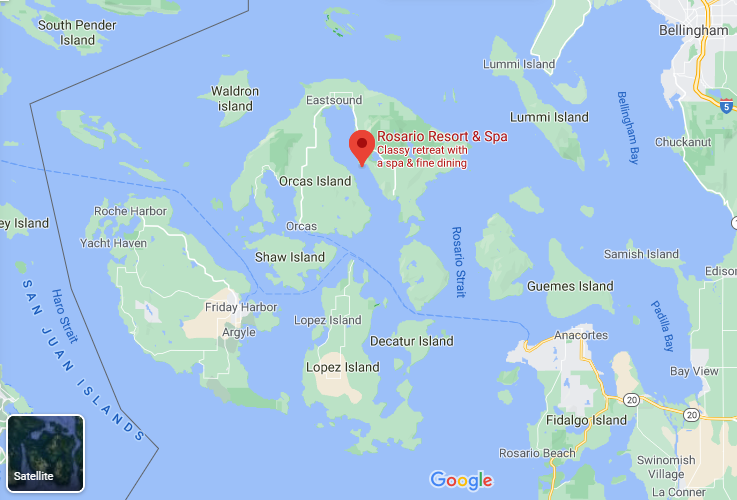
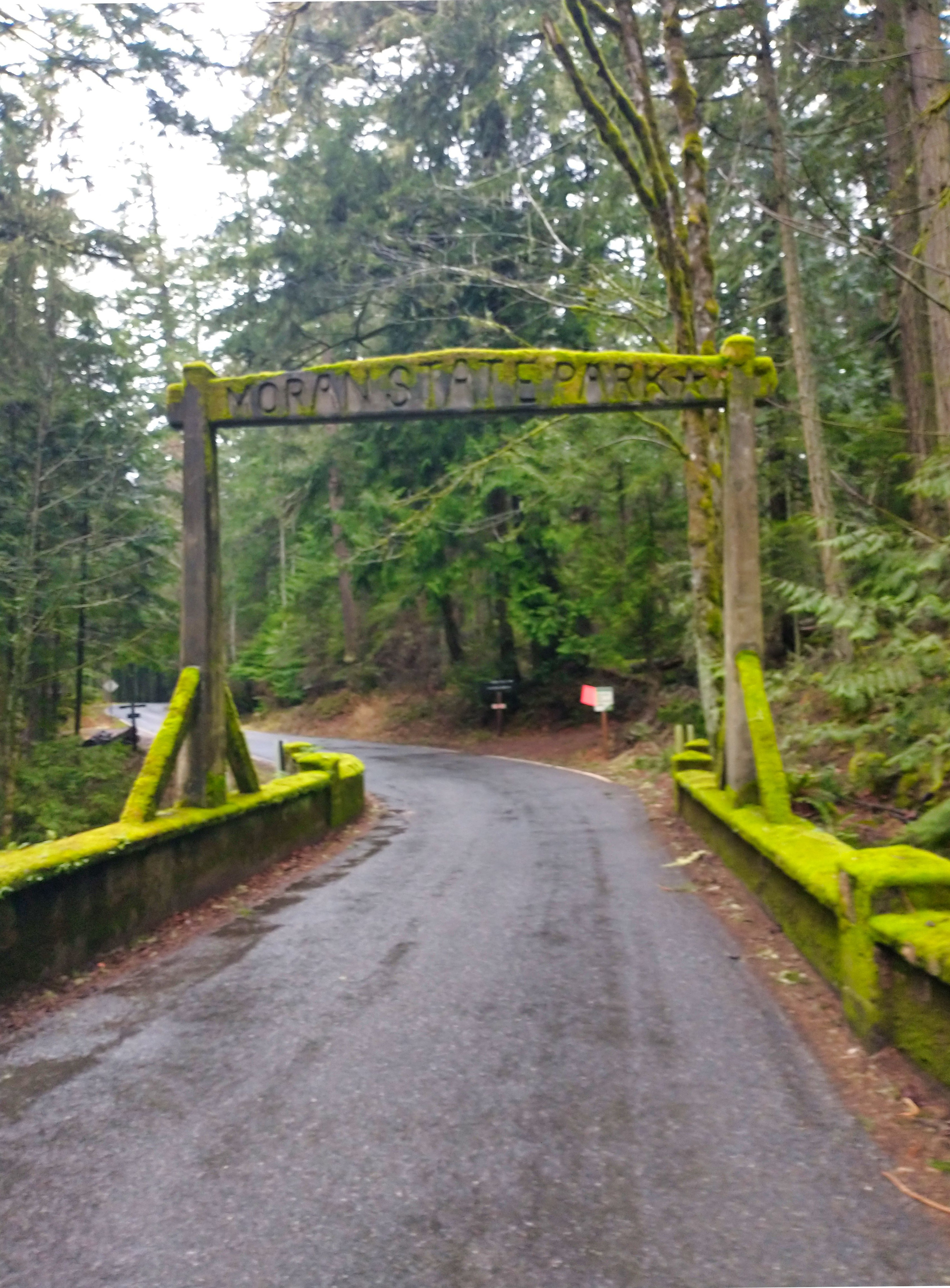
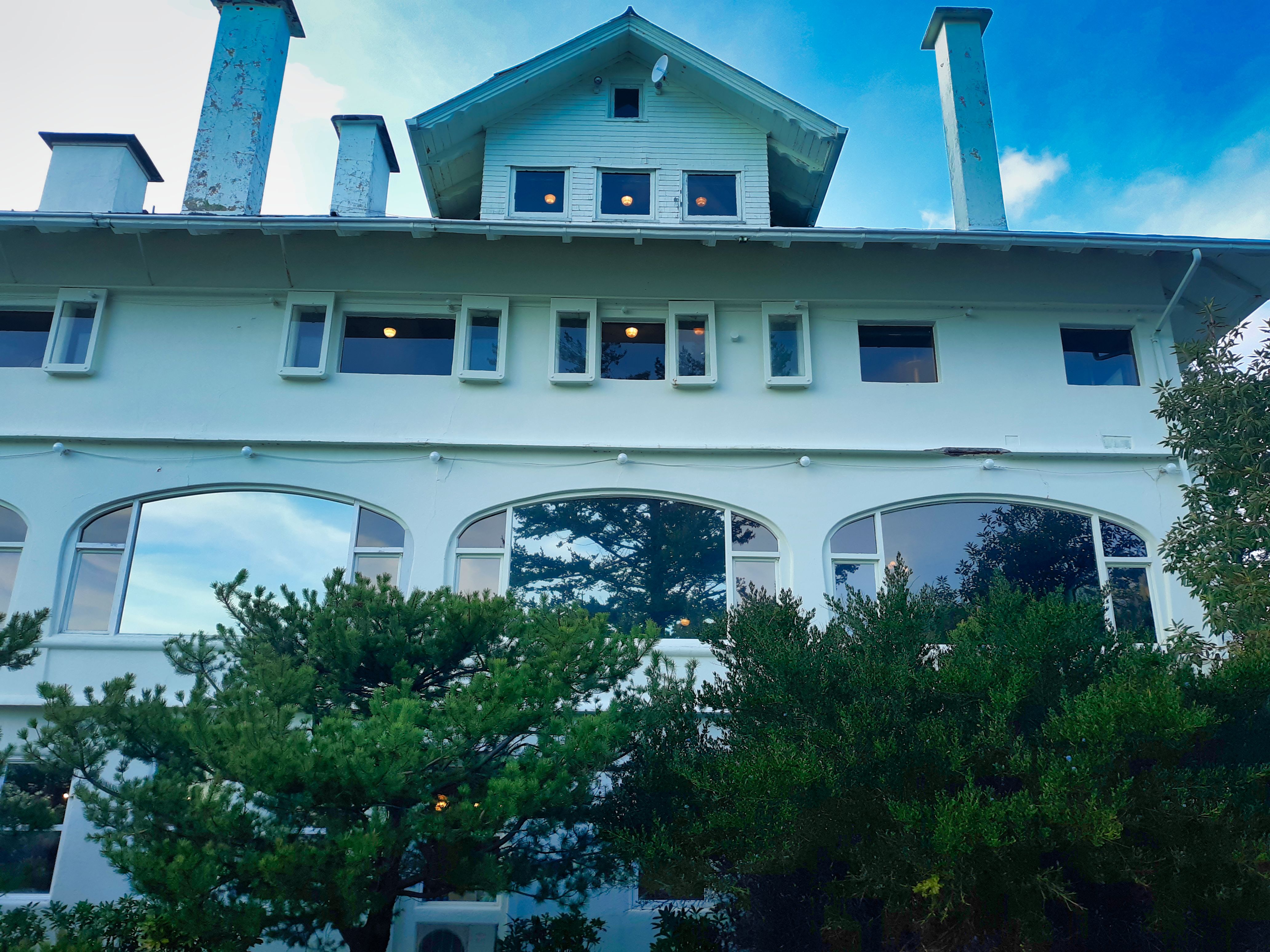
We figured that we should probably share some of the photos from our investigation of home to Alice Rheem, Moran Manor. As we discussed in Episode 008, Moran Manor is the crown jewel of the Rosario Resort & Spa, on Orcas Island, part of the San Juan Island chain in Puget Sound.
Nick and his wife Kel visited in late January 2021. Winter being the island’s off-season, and with Covid restrictions in play both by the state of Washington and San Juan County, so there was not much to do on the island at the time. The island’s main industries are tourism, agriculture, and outdoor recreation, so with tourism hampered by the season and restrictions, and outdoor recreation made uncomfortable by the winter storm blowing in from the Pacific over the weekend they visited, it was good that they had ‘ghost hunting’ on their agenda because there was precious little else to do.
The resort covers 40 acres of the island, a scant sliver compared to the 7,000 acres originally owned by Robert Moran. The majority of the original Moran estate was donated to the parks service, creating the 5,000+ acre Moran State Park. The centerpiece of the park, covered with tons of waterfalls and hiking, biking, and horseback trails, it Mount Constitution, the highest point in the San Juans at just under 2,400 ft.
A shot from the top of Mt. Constitution. Our Bellingham friends may notice the small wisp of their city in the upper center bay, and Mt. Baker and the Two Sisters on the horizon.
Moran Manor itself sits near the foot of the mountain, right on the edge of the state park, constructed by Robert Moran himself. Moran, a shipbuilder and former mayor of Seattle, arrived on the West Coast in 1875 with only a dime in his pocket. He worked his way up from an engineer to running one of the largest shipyards in America, supplying transportation for much of the Yukon gold rush and building the USS Nebraska.
Construction on Moran Manor finished in 1909, after Moran’s doctor pleaded with him to take things easy for his health. The plan worked; island life agreed with Moran, outliving the doctor’s expectations by over 30 years, and in the 1930’s the home was sold to Donald Rheem, the water heater and heat pump magnate.
Rheem intended to use the Manor as a summer home, but as he ran out of ways to subdue his wild socialite wife, Alice, he decided his last resort was to send her out to Orcas Island where the amount of trouble she could cause would be at a minimum. Naturally, the seclusion only instilled desperation in Alice, and it was soon a regular to find Alice donning her favorite red dress, climb aboard her Harley-Davidson motorcycle, and drive into the small nearby town of Eastsound to drink and play cards.
Alice died in 1959, reportedly from complications with alcoholism, but it appears she hasn’t yet left. Alice’s ghost has often been reported on the grounds, sometimes walking down the stairway at the main entrance in her nightgown, occasionally in the parking lot departing into town on her motorcycle. Today, the Manor is part of a resort and spa, and many guests and employees have reported encounters with Alice over the years.
Living in nearby Whatcom County, Nick decided to investigate, and reserved a child-free weekend at the resort to entice his wife, Mikael, to come along. Mikael is not a believer in ghosts and spirits (with the possible exception of theatre ghosts), but played along and let Nick have his fun.
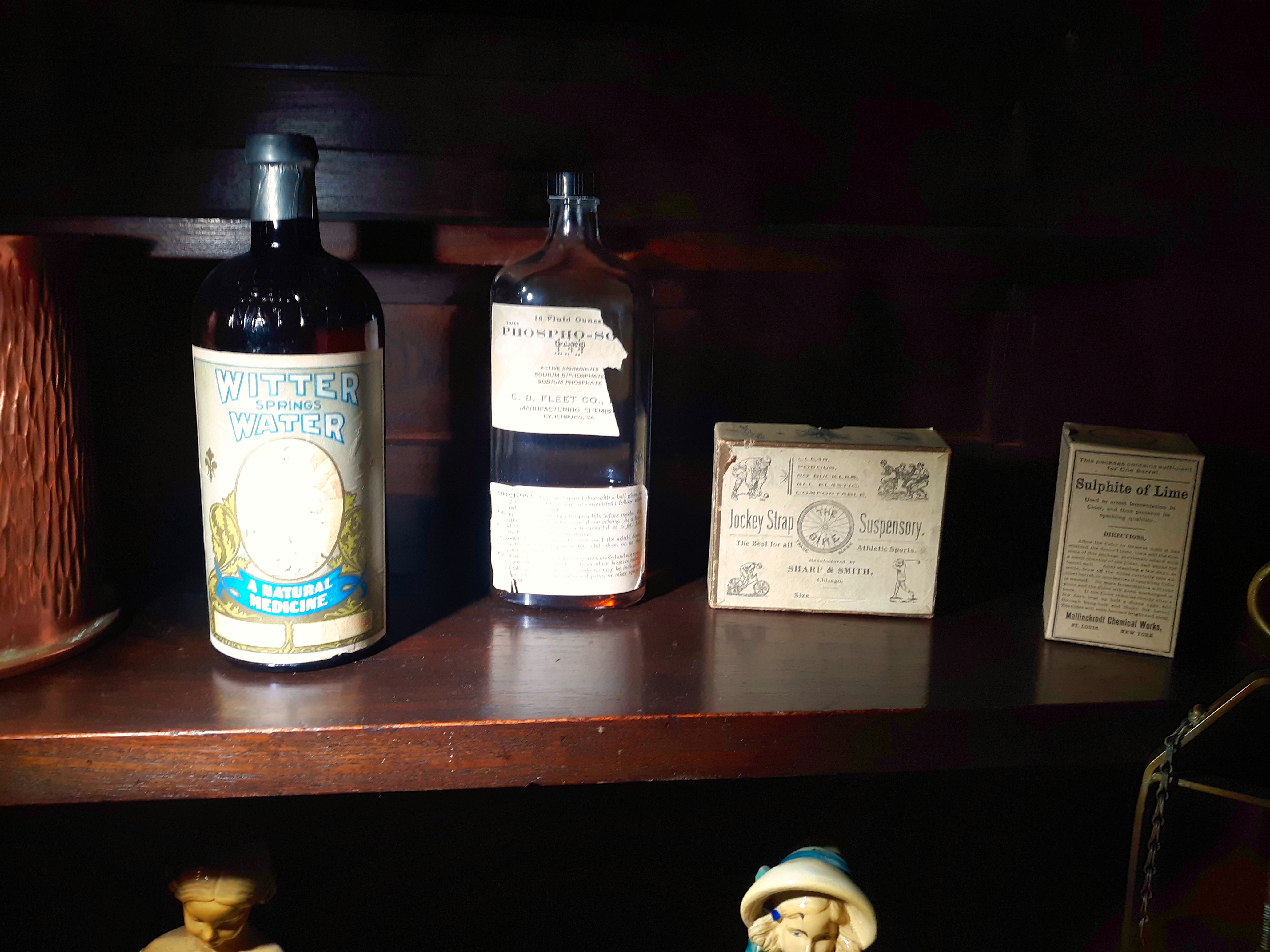
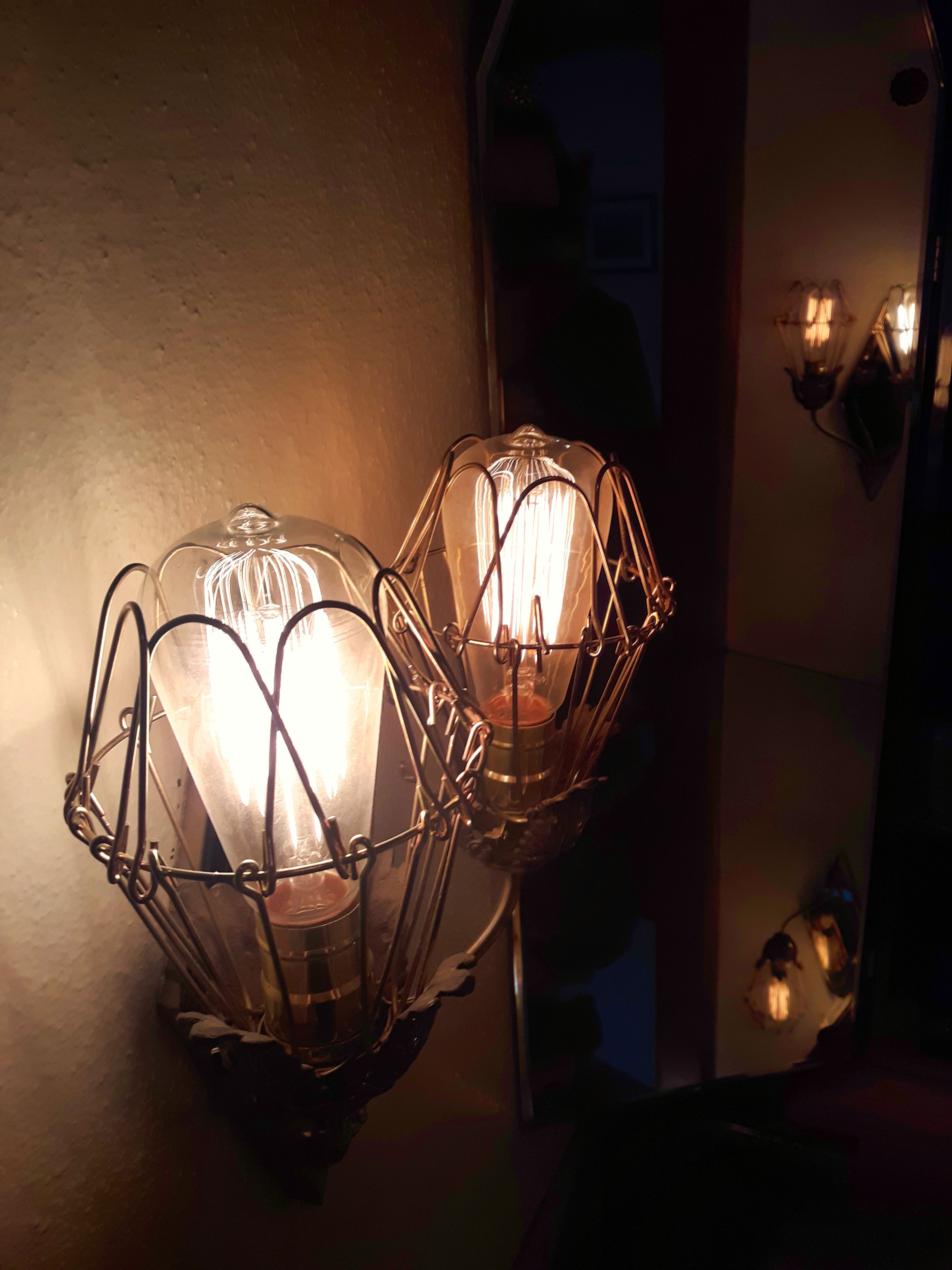
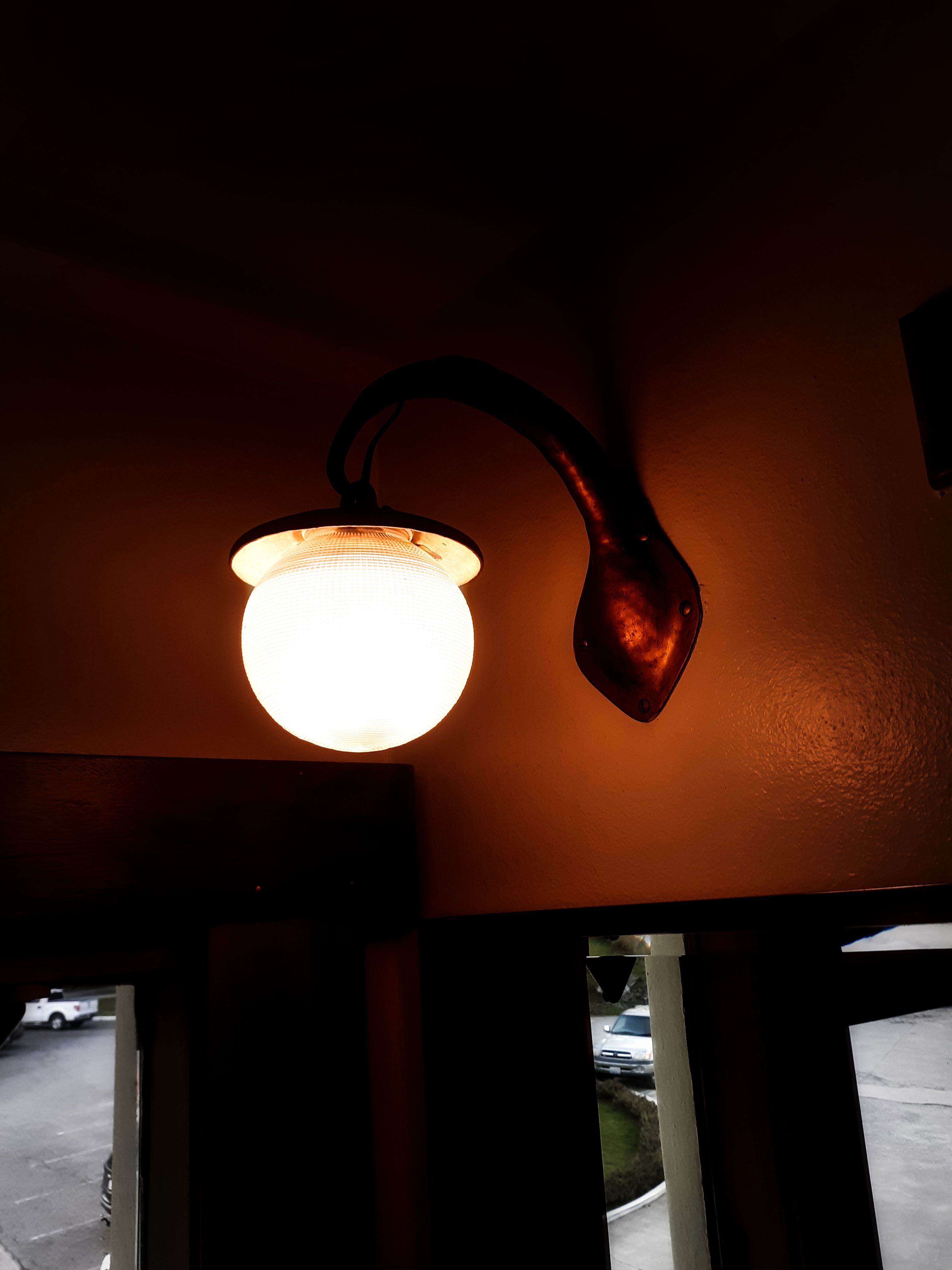
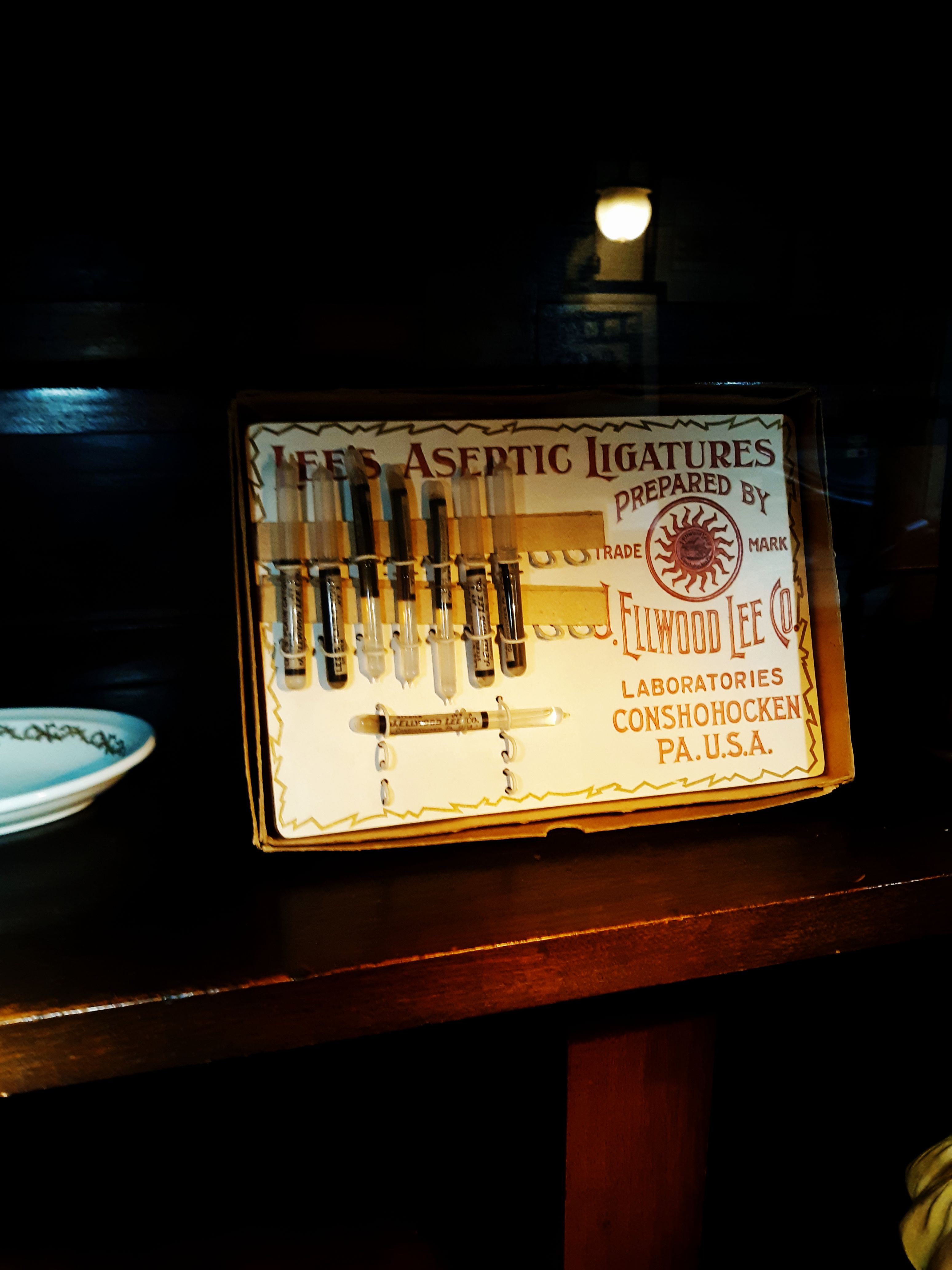
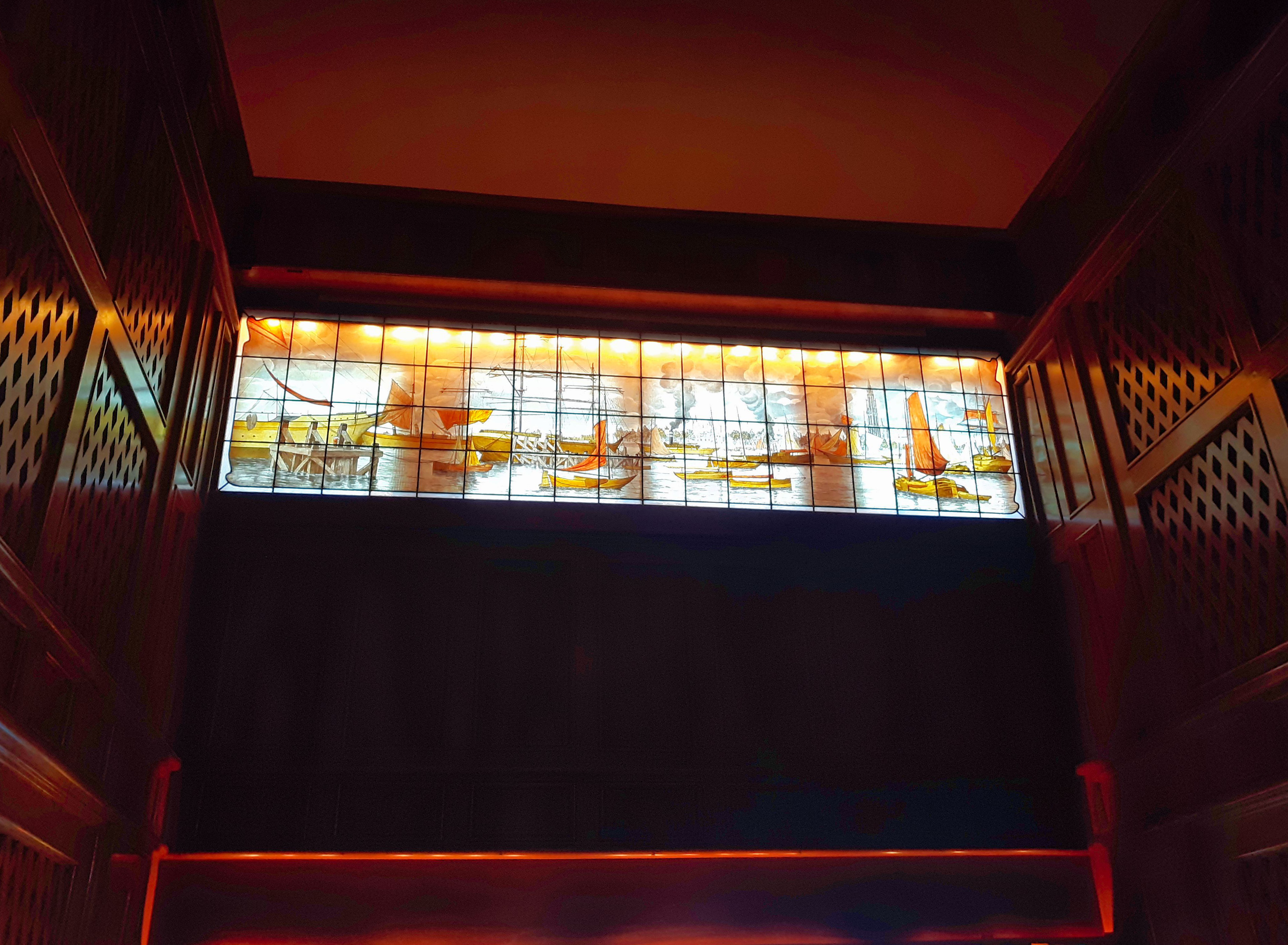
Though the Manor building itself no longer has guests overnight, much of the building is open for free exploration (some areas were closed off this weekend simply for Covid restrictions). A large portion of the second floor has been converted into a museum space for Robert Moran and his accomplishments. Among the artifacts were stories of shipbuilding, items from Robert’s office and his photography habit, odds and ends, and some of his stained glasswork collection.
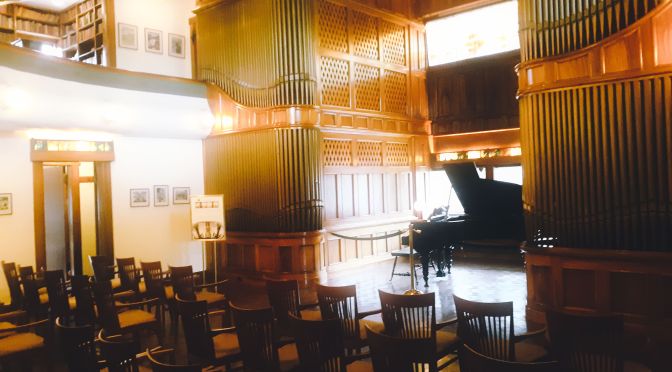
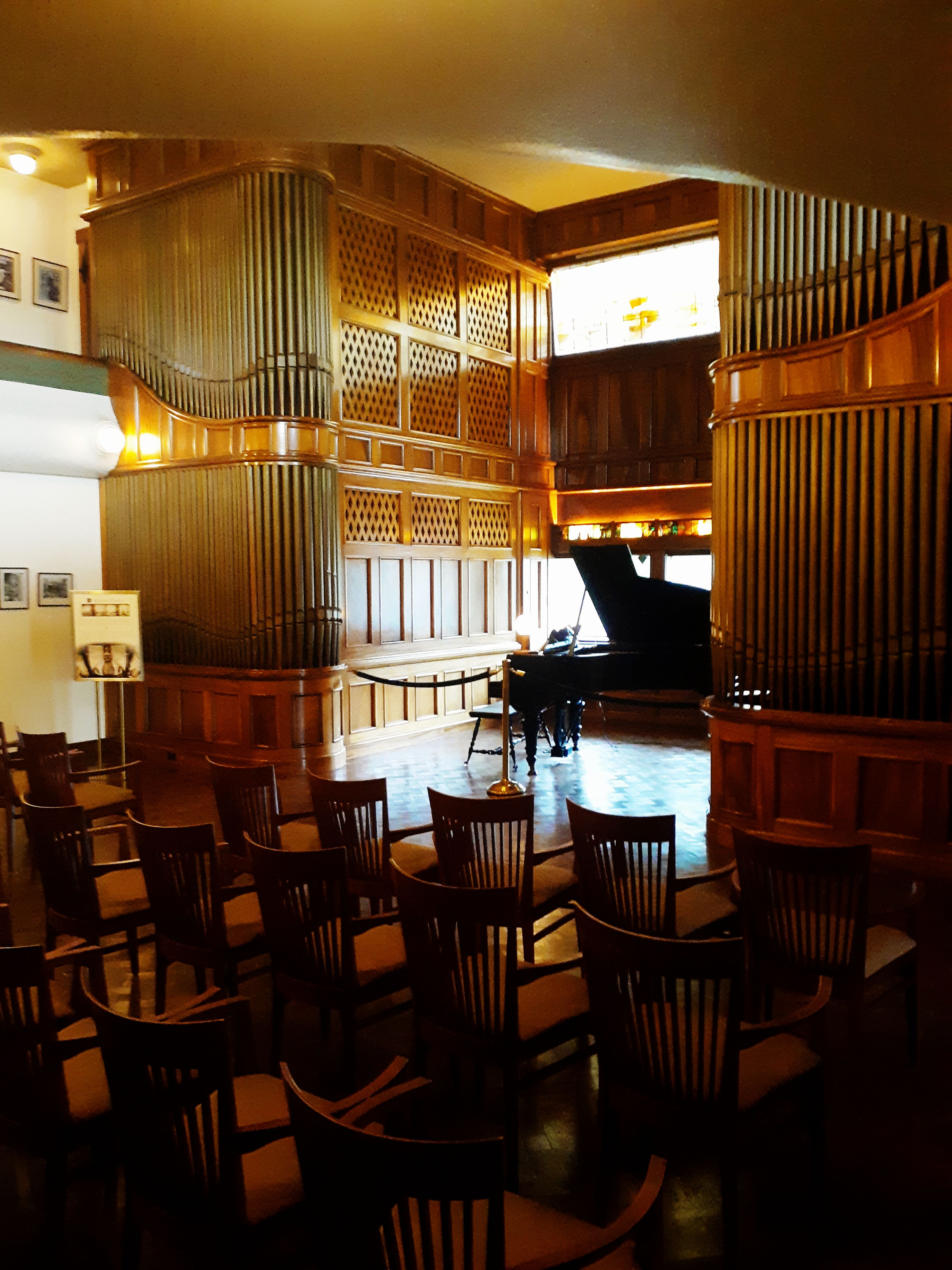
The grandest feature of the second story is the two-story Aeolian pipe organ. During less restrictive times, the Manor is known to show old silent movies scored by the organ (most famously the original 1929 Phantom of the Opera). It was in this room that Nick thought he collected potential EVP’s.
Nick was using two pieces of equipment as he searched the museum, a micro camcorder and a voice recorder app on his cell phone (he has never declared himself a serious ghost hunter). While in the main music room, Nick heard a creak from the floor above him, though Nick and Mikael were the only people in the building above the first floor. In this clip, you can hear a series of audio pops, Mikael ask Nick what’s going on, and Nick answers he thought he heard someone above him. In the background is music being piped into the room, likely by CD. The creak happens roughly where the pops occurs.
Nick hears a creak
We noticed what may be a whisper under the pops, so cleaned that up and isolated it as best we could. Nick thought it sounded like someone saying, “never around”.
Never ’round?
Having thought they heard something, Nick and Mikael sat down in the music room and just listened for a bit. That is when they recorded another voice without an owner.
Unclaimed male voice
Though is it possible to hear people talking on the first floor (as evidenced in the full walkthrough recording) it is more muffled and continuous than the voice in this clip. Nick thought it sounded like a man saying, “twelve”.
Twelve?
We are making the full walkthrough recording available for anyone who wants to go through it on their own, but fair warning: Nick often forgot that he was carrying a recorder, and let his sleeve brush against the mic a lot and once or twice even absent-mindedly put it in his pocket.
There was little about Alice Rheem in the building, despite a plethora of information on the website. The bar has a drink named after her, The Lady in Red, and Mikael managed to locate a collection of old Vogue magazines owned by Alice in one of the bathrooms.
So, did Nick collect evidence that Alice or someone else still is creeping around Moran Manor? Maybe? Nick’s evidence is pretty thin, at best, but it definitely is interesting enough to warrant a second look in the future. Until then, the closest Nick got to finding a ghost was accidentally taking a picture of a park ranger while looking something up on his phone:
It’s nearly Valentine’s Day, love is in the air, and Nick finally followed through on his threats to go looking for sex ghosts. In this episode, we take a look first at the ‘Lady in Red’ phenomenon, then focus on one in particular, Alice Rheem, the specter of Moran Manor on Puget Sound’s Orcas Island. Nick captures some probably-not-EVP’s, Cait eats a lot of french fries, and we present a whiskey-based Valentine’s drink sure to knock the socks (and other clothing articles) off your special someone!
Like the podcast? Want more? Tell a friend! And please consider subscribing to our Patreon! Your Patreon support allows us the freedom to create more, bigger, and better content!
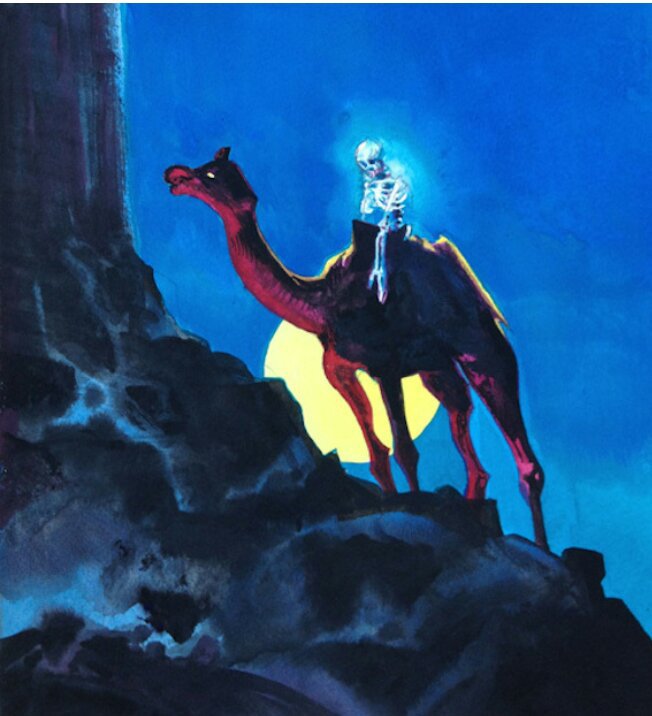
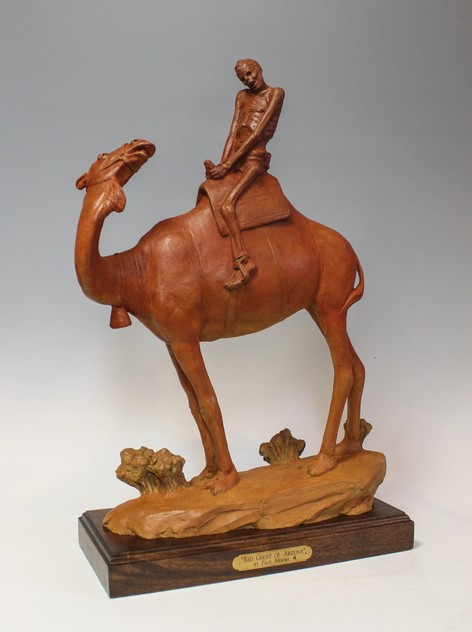
The Red Ghost terrorized Arizona during the 1880’s. The first reported appearance is in 1883, when it trampled a woman to death and left traces of red hair stuck to nearby tall grass at the scene. Later, a cowboy tried to rope the beast, but it turned and charged him, killing the man and his mount. A group of miners pursued it along the Verde River. It evaded capture, but shook something loose off of its back, a rotted human skull with dried skin and patches of hair stuck to it.
As sightings continued, the legend grew. Most described it as a great red demon with the devil himself riding on its back. Some witnesses claimed it was 30 feet tall. Other stories said that it had fought and devoured a grizzly, and that it could vanish before your eyes.
The Red Ghost’s reign of terror finally ended when a rancher in Eagle Creek caught it feasting on vegetables in his garden and shot at it, killing it dead. It was then that the Ghost’s true nature was revealed. It was a large camel, with gruesome straps of rawhide criss-crossing and digging into its body. The rawhide straps were apparently used to lash a human body, now in extreme decay, to the camel’s back. But how did such a creature in up in late 19th century Arizona?
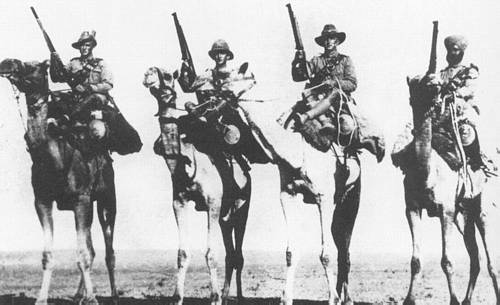
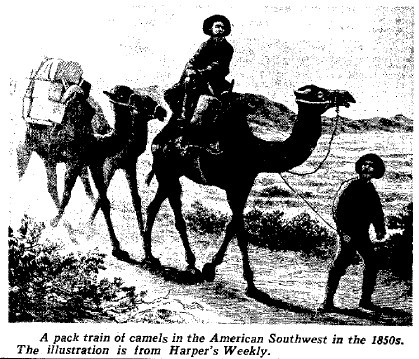
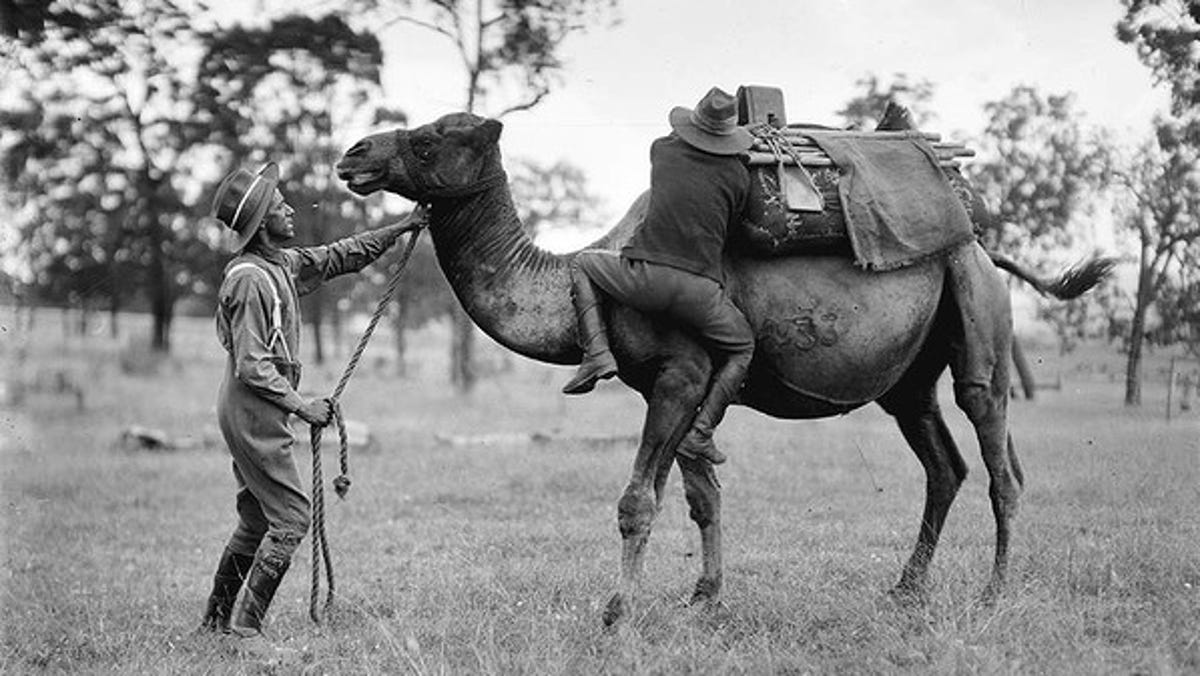
For that answer, we have to go back decades, to a pre-Civil War America. In 1853, Secretary of War and future Confederate president, Jefferson Davis got approval from Congress, after much lobbying, to spend $30,000 on the importation of camels and dromedaries for military purposes. This was still decades before the transcontinental railroad, and Davis saw the camels as the key to westward expansion, especially through the arid southwest deserts. By 1857, 75 camels had been imported to America under the plan. Unfortunately, within a decade the initiative would be scrapped and all camels auctioned off.
Despite its epitaph, the program was largely successful. The camels were stationed with a U.S. Army at Camp Verde in Texas. The camels’ primary use was to strengthen current travel routes and poke and prod out new ones west to the Pacific and south to Mexico.
Two dozen of these camels made the famous trek to Fort Tejon outside Los Angeles under the usage of hero of the west Edward Beale. Beale’s troupe made the 1500 mile trek in just three months, a feat considered impossible at the time. The route discovered by Beale’s camel caravan was used to create the Beale Wagon Road, guiding thousands of settlers out west, and parts were adopted to make the Santa Fe Railroad’s contribution to the transcontinental railroad, and eventually Route 66 and Interstate 40.
The camels did have downsides, though. They were renowned for scaring the hell out of the horses, and given half-a-chance would just wander off overnight. Of course, this is all to say nothing of a pack animal that can spit with pinpoint accuracy at any handler it doesn’t agree with.
But the real straw that broke the camel program’s back came as Congress became afraid to pursue further importation of the animals due to pressure placed on them from lobbyists in the mule industry. Though this was plenty, further complications came from the secession of Texas and the South, causing Camp Verde to fall into the hands of the Confederacy. Left to Confederate care, the camels’ security was more lax, and many if them simply wandered off when let loose to graze.
The camel unit quickly scattered throughout the region. Union forces re-captured three of the beasts in Arkansas, but quickly auctioned then off. Some camels made it to Mexico, reportedly. A few found employment in the Confederate Postal Service. One, nicknamed Old Douglas, became the property of the 43rd Mississippi Infantry and was killed during the siege of Vicksburg, an act which so enraged Confederste Colonel Bevier that he tasked six of his best snipers with identifying and killing the Union sharpshooter that gunned Douglas down.
Some escaped camels turned feral and survived in the wilderness, but they never had enough numbers to provide a thriving and lasting sustainable herd. People would have chance encounters with these wild camels from time-to-time, the last report of such coming from the mid-20th century.
The origin of The Red Ghost himself is still something of a mystery. One rumor is that the rider was an Army soldier who was deathly afraid of the camels, so his fellow soldiers tied him to the back so he wouldn’t have to worry about falling off. Unfortunately, the beast took off and the soldiers were unable to keep up pursuit.
This seems a pretty poor explanation under scrutiny, though, because it relies on a soldier being tied on top in such a way that he couldn’t get himself off. It’s hard to image an arrangement under friendly intentions where the rider would not be given means to remove himself from the beast’s back.
Another tale tells of a rider that was too tired to hold onto the beast and decide to tie himself on instead, but again that would leave us a rider that should be able to get himself loose before death set in. A more likely incident might be a screwball episode of frontier justice, or maybe a death sentence created by a particularly creative and sadistic outlaw, either one a situation where an individual would be attached to an animal without means of removing themselves, then the animal set loose with no destination in mind. Whatever the story, the rider’s fate and identity were never discovered. And despite The Red Ghost’s capture and killing, reports of a red camel being ridden by a skeleton persisted for years afterwards.
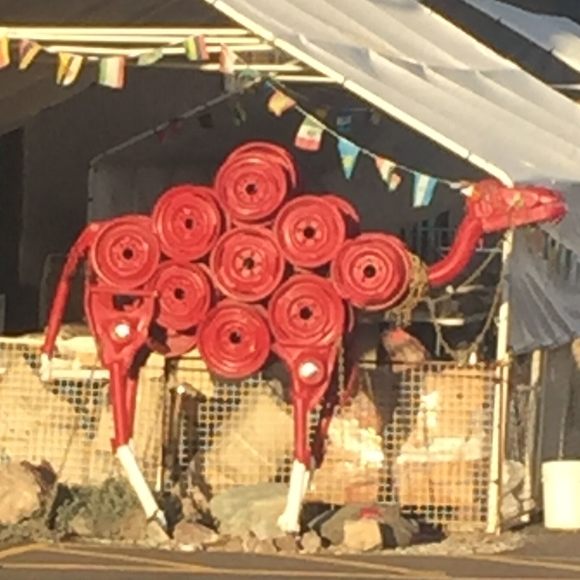
Today, a bright red scrap metal sculpture of The Red Ghost sits in Quartzside, AZ, where it has been lovingly named Georgette. Old Douglas has a grave in Cedar Hill Cemetery in Vicksburg, Mississippi, somehow fittingly as it’s Jefferson Davis’s hometown.
Interestingly enough, though, another ghost story has sprung forth from the history of these imported camels. Three camels were purportedly purchased from an Army auction by a prospector by the name of Jake. The soldiers warned Jake that the camels were quite ornery, but Jake took good care of them and never had anything but praise for them and their behavior.
Eventually, Jake hit pay dirt and led his camels into town, laden in gold for the exchange. This caught the attention of a would-be claim jumper named Paul Adams. He heard of Jake’s success and decided to follow him and his camels out of town.
Jake was smart enough to not head directly to his claim, and instead took a long, circular route, so long that he ended up having to camp for the night. Mistaking the temporary camp site for the actual gold claim, Adams snuck in and murdered Jake. Trying to protect his owner, one of the camels attacked Adams, biting him, but eventually getting gunned down as well.
It wasn’t long before Adams realized his mistake, that this wasn’t the claim, and spent the next few days searching the nearby area, vainly trying to locate the real spot. It was on one night of searching that Paul Adams was awoken and saw the ghost of Jake on the back of his camel looking over the murderer. He quickly mounted his horse and fled, but the galloping camel continued the chase, unrelenting until Adams rode into town. Adams was so frightened he confessed all his deeds in exchange for the protection of a sheriff’s jail cell.
It’s getting murky in here! In this episode of The Booze + Spirits Podcast, Nick takes us on a quest for bloody Confederate vengeance, Cait introduces us to a Voodoo priestess who refused to die alone, and Theo the dog gets his butt in everything. All this, plus a lemony tequila drink that’s sure to thrill your taste buds!
Like the podcast? Want more? Tell a friend! And please consider subscribing to our Patreon! Your Patreon support allows us the freedom to create more, bigger, and better content!
The Phantom Trapper is a ghost seen in the Labrador area of Canada, whose presence is often said to herald the arrival of a large storm.
The person most commonly accredited to being The Phantom Trapper was a man named Esau Gillingham. He was a Newfoundlander who would regularly cross the Straits of Belle Isle into Labrador to trap. Depending on who tells the tale, there’s two slants on the story that are usually told.
The first is that trapping never made Esau the kind of money he wanted, so he ended up setting an illegal still up in the tall spruces. This swill was a foul but effective alcohol made from pine cones, sugar, and yeast, and he called it ‘smoke’, earning him the nickname ‘Smoker’.
The other version of the tale is that he actually brought back very fine, valuable furs whenever he returned, which was kind of fortunate since in this version he was a horrible, raging, hot-headed, woman-attacking asshole. The money he and his skins brought into town were the only thing that would convince the townspeople to put up with him for a short time. But eventually his drunken and ornery side would become too much, and he would wear out his welcome and get kicked out of town until the next time he had a load of furs. He still makes and sells smoke in this version, but it ends up more a feather in his ne’er-do-well hat rather than being a key part of his origin story. In some tellings, he continued selling smoke even though he was well aware that it was poisonous.
Whichever the version we prefer, eventually the Mounties found Smoker’s still, smashed his kegs, and hauled him off to jail in St. John’s for a year. But that time in the cooler just gave Smoker the time he needed to plan the next stage of his evolution.
After being released, he went around begging or stealing every white husky he could in the area, building a new team of dogs–some say a team of 8 while others say as many as 14. He then made himself a suit exclusively of white animal skins, and after restarting his distilling business, painted his komatik and kegs white as well.
Now decked all in white, Smoker began selling his contraband booze again. RCMP tried several times to shut him down again, but his new white camouflaged outfit made it impossible to track him for long in the snow.
There’s several tales about how Smoker met his end. Some say he harassed the wrong innkeeper’s wife and got gunned down by her husband. Some say he got lost while out in the wilderness or maybe got caught in a vicious storm.
My version is that it was his own smoke did him in at the end. While soused on his own drink, Smoke fell off of a fish flake and broke his back. He lay, on the frozen ground, suffering and unable to move for three days. Sensing his time was drawing to a close, and having a pretty good idea what was waiting for him in the great hereafter, he shouted out, “Lord God, don’t send me to Hell! Let me drive my dogs till the end of time, and I’ll make up for all the bad I’ve done!”
Eventually Smoker’s body was found and brought back tp Newfoundland to be buried, but he would not find peace in the grave. Legend tells that even today the howl of the Labrador wind is sometimes joined by the sound of a dog team running through the night.
Some hear them passing by in the snow, while others have heard their traces slapping against the outside of their cabin. Occasionally a person might catch a glimpse of an all white dog team being driven by a figure in white furs on a white komatik, but they never leave tracks in the snow or stop on their eternal run.
Stories tell of a Labrador man who got lost in a blizzard while driving his dog team, and became desperate to find shelter. As he drove on, he was passed by a team of all white dogs piloted by a man in white furs. Sensing this was his best opportunity, he followed the team.
A half-hour later, the lost man and the white driver came upon a fishing village, and hearing the dogs a fisherman stood in the doorway of his hut to see who was approaching. The white driver continued on past with his team, but the lost driver slowed to a stop, thrilled to find shelter, and called out, “Thank you!”
“You’re welcome!” called out the fisherman. “Come in a get warm!” The lost man thanked the fisherman, but corrected him that he was calling out to the other driver. The fisherman just looked at him strangely, and said that he never saw or heard another driver.
Another story involved a man on foot who got caught in a blizzard and had nearly froze to death by the time the Phantom Trapper found him. The trapper easily picked the man up and set him on his sled, covering him with warm skins, and drove towards the nearest inn. Upon arrival, the trapper again easily picked up and carried the man inside, sitting him on a chair next to the fire. The trapper turned to the innkeeper, told him to take care of the half-dead man, and promptly disappeared into thin air.
Hero, villain, or antihero, the Phantom Trapper, or sometimes Damned Trapper, is a proud piece of local folklore. He was fictionalized in the 1972 novel White Eskimo: a Novel of Labrador, and is a respected entity in the local folklore.
We thought it might be a fun idea to write out some of the stories that we tell on the podcast. After all, it can be hard to retell a story solely from listening to it, especially after it’s been buffeted on all sides by profanity and inside jokes.
So, starting this week, we’ll be sharing written versions of our tales here on the website, about once or twice a week. Hope you all enjoy it!
Where there’s smoke, there’s fire, and where there’s fire, there’s the McDonald siblings. In this episode, Nick and Cait have turned their eyes to stories of supernatural smoke and fire this week, as we visit a fiery poltergeist (feuergeist?) in Illinois and a witch’s tree in North Carolina that refused to burn down. All this, plus smokey beverages and feet discussions!
A photo of Macomb Firestarter Wonet McNeil is found here. You can find some good photos of the Cora Tree here.
Like the podcast? Want more? Tell a friend! And please consider subscribing to our Patreon! Your Patreon support allows us the freedom to create more, bigger, and better content!
And be sure to rate, review, and subscribe through Anchor, Apple, Spotify, Google, YouTube, or the podcast delivery system of your choice!
Holiday tidings to you all! Once upon a time, it was traditional to gather family and friends together on Christmas Eve and share tales of ghosts and spirits to scare and delight each other, a tradition that sorely needs to make a come back in our opinion!
So in this special episode, join Nick and Cait for a classic Victorian Christmas Eve, where we chill the air with tales of ghostly fur trappers, haunted hot springs, and a ghost named ‘Daddy’. It’s a double-length episode! That means Cait runs out of alcohol, Nick does NOT, and chaos and over-sharing ensue.
Unfortunately, the Tom & Jerry Batter talked about in this episode didn’t come together in time to have the recipe published along-side the episode (stay tuned, we WILL post it in the future). But, being the holidays, we’ve included some additional recipes (not always of the drink variety!) to make up for the loss, as well as because, hey, it’s Christmas!
Like the podcast? Want more? Tell a friend! And be sure to rate, review, and subscribe through Anchor, Apple, Spotify, Google, YouTube, or the podcast delivery system of your choice!

























 The Booze + Spirits Podcast